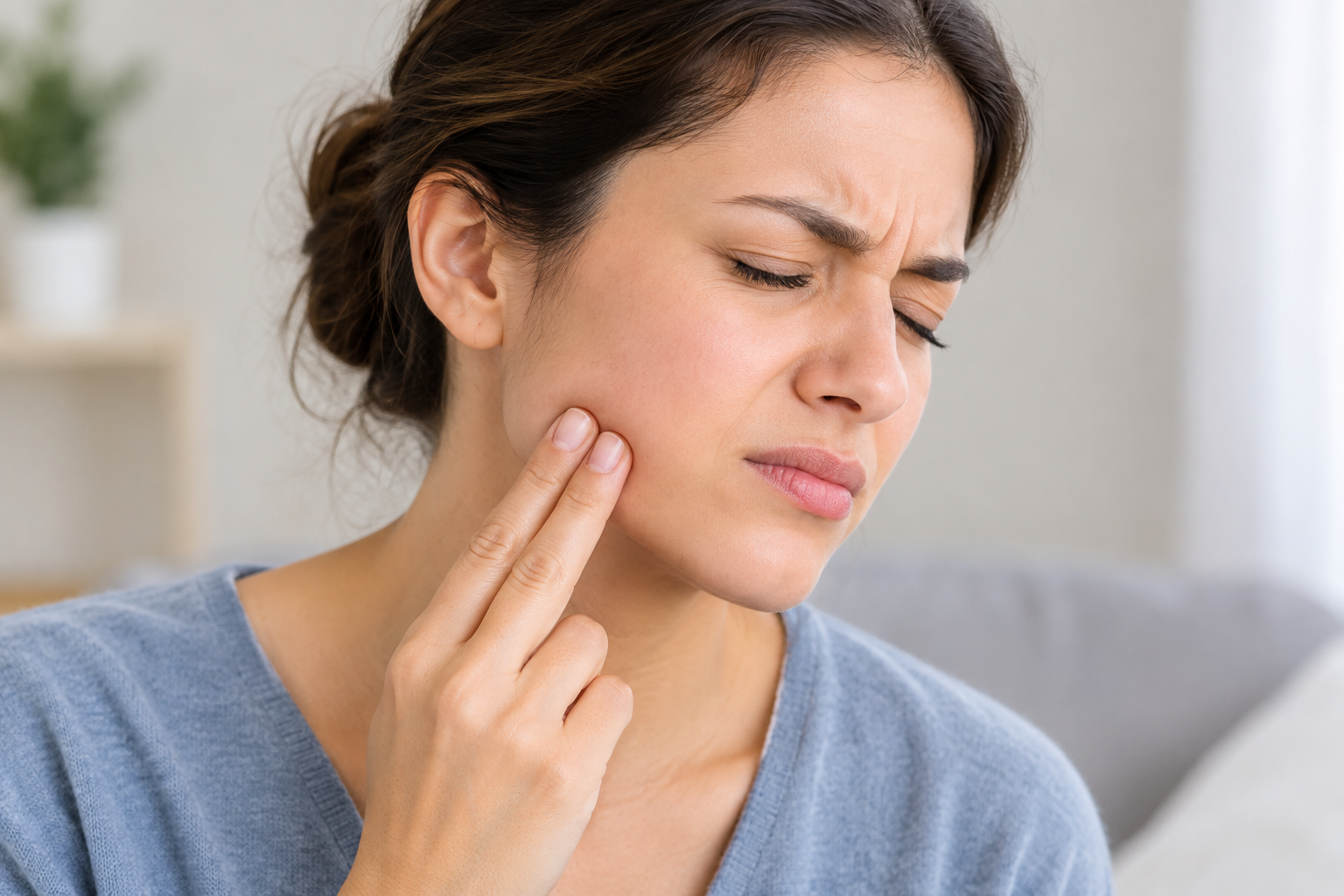
If you live with fibromyalgia, you already know the pain doesn’t stay in one place. It creeps into your neck, your lower back, your legs — and for a lot of us, it settles into the jaw. I didn’t expect that when I was first diagnosed. I assumed jaw pain was a “dental problem,” something separate from fibromyalgia entirely. It took me months (and a very unnecessary trip to an oral surgeon) to learn that fibromyalgia jaw pain is not only real, it’s one of the more common — and more overlooked — symptoms of this condition.
This post breaks down why fibromyalgia affects the jaw, how it overlaps with temporomandibular joint (TMJ) disorders, and what has actually helped me (and what the research says helps most people) manage it. This is not medical advice — it’s a mix of researched facts and lived experience, and you should always loop in your doctor or dentist for a proper diagnosis.
What Is Fibromyalgia Jaw Pain, Really?
Fibromyalgia is a chronic condition marked by widespread musculoskeletal pain, fatigue, sleep problems, and cognitive fog often nicknamed “fibro fog.” At its core, fibromyalgia is thought to involve central sensitization — the brain and spinal cord amplify pain signals more than they should, so things that shouldn’t hurt much (light pressure, mild muscle tension) end up feeling intense.
The jaw is a hotspot for this because it’s surrounded by a dense network of muscles, nerves, and a joint — the temporomandibular joint (TMJ) — that’s in near-constant use every time you talk, chew, swallow, or yawn. When your nervous system is already primed to overreact to pain, that joint and its muscles become an easy target.
How Common Is This, Actually?
Jaw and facial pain shows up far more often in fibromyalgia patients than most people realize. Some clinical reports estimate that up to roughly two-thirds of people with fibromyalgia experience TMJ-related discomfort or dysfunction at some point. Research bodies including the National Institutes of Health have also documented a notably higher rate of TMJ disorder symptoms — clicking, popping, facial pain, and muscle tenderness in the head and neck — among fibromyalgia patients compared to the general population.
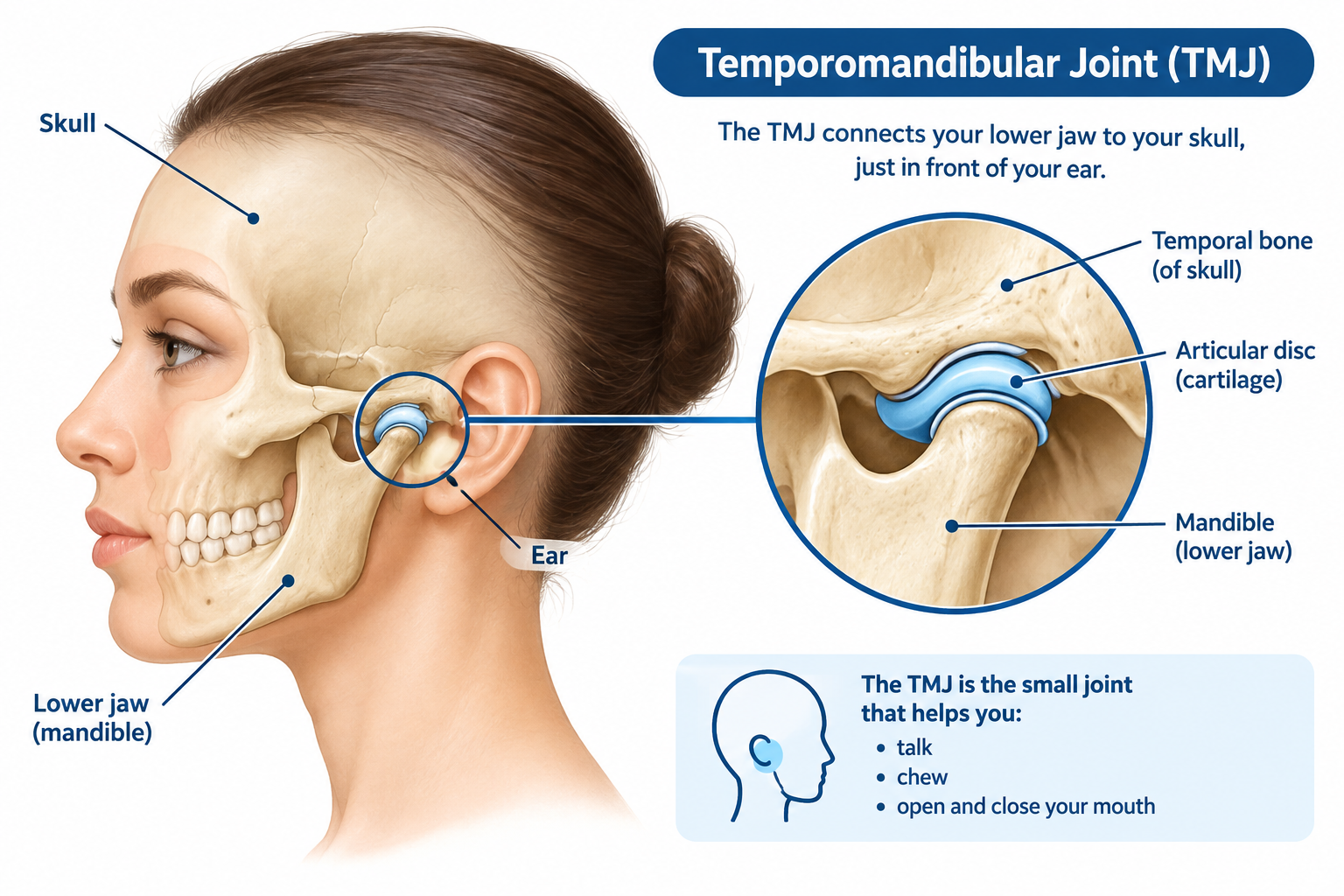
The Fibromyalgia–TMJ Connection: Why They Show Up Together
Fibromyalgia and TMJ disorders aren’t the same condition, but they overlap so often that some researchers describe them as “co-travelers.” Here’s what seems to be driving the overlap:
1. Central Sensitization
Because fibromyalgia turns up the “volume” on pain signals throughout the body, the nerve pathways serving the jaw — which converge with pathways already sensitized by fibromyalgia — end up transmitting stronger pain signals from completely normal jaw movement.
2. Muscle Tenderness and Tension
Fibromyalgia causes widespread tenderness in muscle tissue, and the muscles that open, close, and move your jaw are not exempt. Tight, tender jaw muscles make chewing, talking, and even resting your face uncomfortable.
3. Bruxism (Teeth Grinding and Clenching)
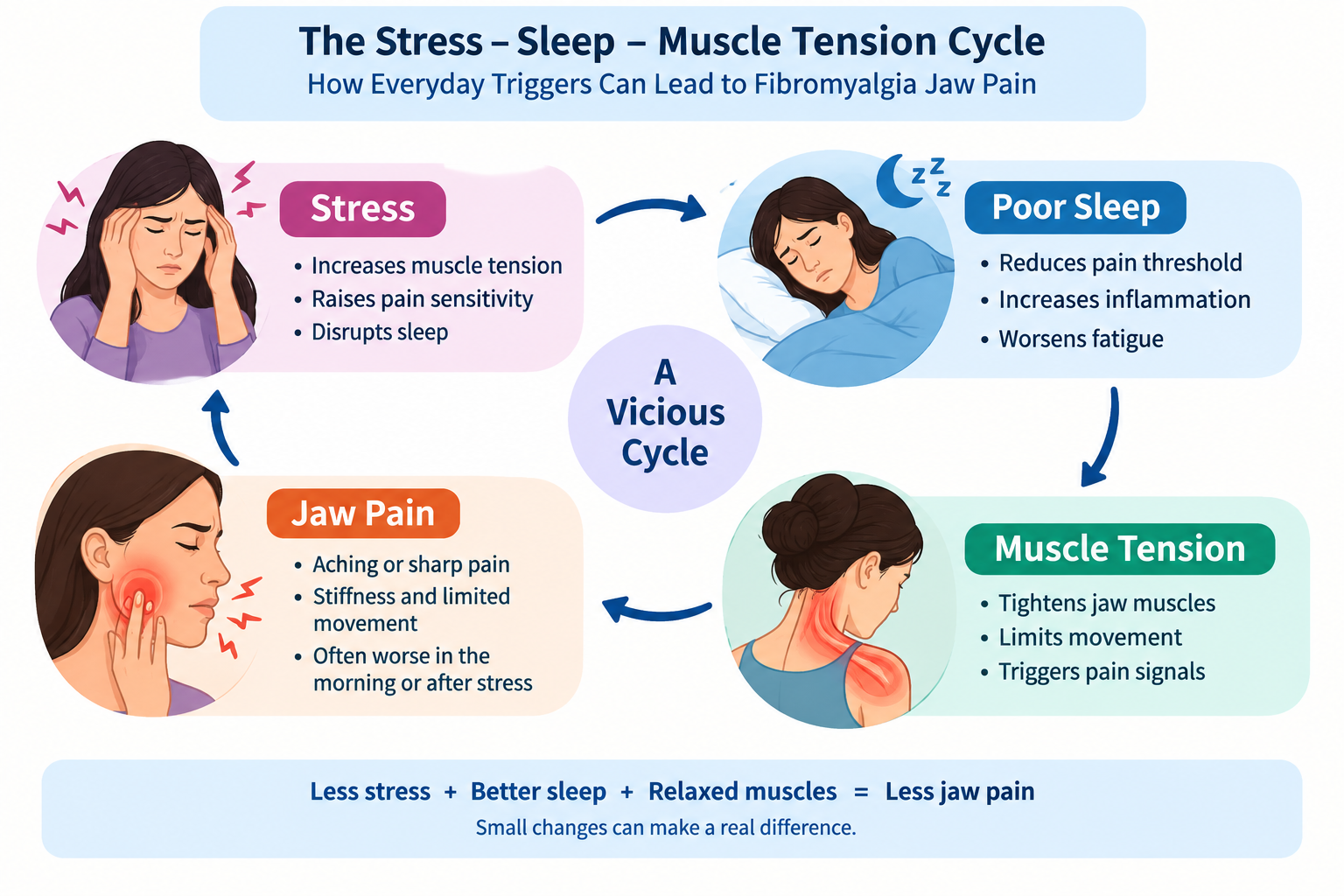
Many people with fibromyalgia clench or grind their teeth at night, a habit called bruxism. Stress and disrupted sleep — both extremely common in fibromyalgia — make bruxism worse, and bruxism in turn puts direct mechanical stress on the jaw joint and surrounding muscles, feeding the pain cycle.
4. Referred Pain
Pain doesn’t always stay where it starts. Tension in the neck and shoulders — another classic fibromyalgia hotspot — can radiate upward and be felt as facial or jaw pain, even when the jaw joint itself isn’t the primary problem.
Symptoms: What Fibromyalgia Jaw Pain Actually Feels Like
Fibromyalgia-related jaw pain tends to overlap heavily with classic TMJ disorder symptoms, which include:
- Aching, tenderness, or stiffness in the jaw muscles
- Pain in front of the ears (where the TMJ sits on each side of the head)
- Clicking, popping, or grating sounds when opening or closing your mouth
- Difficulty opening your mouth fully, or a “locking” sensation
- Headaches, especially near the temples
- Earaches or a feeling of ear fullness without infection
- Tooth pain or sensitivity that isn’t caused by a dental problem
- Pain that worsens with talking, chewing gum, or long phone calls
One thing that separates fibromyalgia-driven jaw pain from a standalone TMJ disorder is context: it tends to show up alongside your other fibromyalgia symptoms — the fatigue, the brain fog, the widespread body aches — rather than in isolation, and it often flares along with the rest of your symptoms rather than on its own schedule.
What Actually Helps: Relief Strategies
None of these are a cure, but they’re the strategies most consistently backed by research and clinical experience — and the ones I lean on personally.
1. Warm Compresses
A warm compress held against the jaw for 10–15 minutes relaxes tense muscles and increases blood flow to the area. This is often the fastest at-home relief for an acute flare.
2. Gentle Jaw Stretches
Slow, controlled jaw-opening exercises (guided by a physical therapist or dentist trained in TMJ care) can reduce stiffness without overworking an already sensitive joint.
3. A Night Guard for Bruxism
If clenching or grinding is part of the picture, a custom-fitted night guard from a dentist can meaningfully cut down on nighttime jaw stress.
4. Soft-Food Days During Flares
On high-pain days, sticking to soft foods (soups, yogurt, eggs, smoothies) reduces the repetitive strain of heavy chewing.
5. Stress Management
Because stress is such a strong trigger for both fibromyalgia flares and jaw clenching, techniques like paced breathing, short meditation sessions, or even just noticing and releasing jaw tension during the day can help break the cycle.
6. Posture Awareness
Forward head posture (very common when we’re hunched over phones or laptops) puts extra strain on the neck and jaw. Small posture corrections throughout the day can ease downstream jaw tension.
7. Physical Therapy
A physical therapist familiar with orofacial pain can target the specific muscles involved and teach exercises tailored to your case rather than generic advice.
8. Medication, Guided by Your Doctor
Depending on your overall fibromyalgia treatment plan, your doctor may discuss muscle relaxants, low-dose options for nerve pain, or short-term anti-inflammatories for flares. This is very individual and worth a real conversation rather than self-prescribing.
9. Tracking Your Triggers
Keeping a simple log of what precedes your worst jaw pain days (stress, poor sleep, a specific food, a long call) can reveal patterns that are easy to miss in the moment.

When to See a Doctor or Dentist
Jaw pain that comes with any of the following deserves a professional evaluation rather than a self-managed approach:
- Sudden inability to open or close your mouth
- Jaw pain following an injury
- Pain that’s constant, severe, or rapidly worsening
- Swelling, fever, or visible asymmetry in the jaw
A dentist can rule out purely dental causes and evaluate for TMJ disorder specifically, while your rheumatologist or primary care provider can help you see how the jaw pain fits into your broader fibromyalgia management plan.
Key Takeaways / Quick Summary
- Fibromyalgia jaw pain is real, common, and closely tied to TMJ disorder symptoms
- Central sensitization, muscle tenderness, bruxism, and referred pain from the neck all play a role
- Symptoms include jaw aching, clicking, headaches, earaches, and pain while chewing or talking
- Warm compresses, night guards, gentle stretching, stress management, and physical therapy are the most reliably helpful strategies
- Persistent, severe, or sudden jaw symptoms should always be checked by a dentist or doctor
FAQ
Is fibromyalgia jaw pain the same as TMJ disorder? Not exactly. They’re separate conditions that frequently overlap and share symptoms. Fibromyalgia can make jaw muscles more tender and pain more intense, while TMJ disorder specifically involves the jaw joint itself. Many people experience both at once.
Can fibromyalgia cause tooth pain? Yes — pain referred from tense jaw muscles or the TMJ can feel like a toothache even when there’s nothing wrong with the tooth itself. It’s still worth ruling out a dental cause first.
Why does my jaw pain get worse with stress? Stress commonly leads to unconscious jaw clenching and teeth grinding, and it also tends to intensify fibromyalgia’s central pain sensitivity — a combination that makes jaw pain noticeably worse during stressful periods.
Will a night guard fix fibromyalgia jaw pain completely? A night guard mainly addresses grinding and clenching, so it can meaningfully reduce mechanical strain on the jaw — but since fibromyalgia pain has multiple contributing factors, it’s usually one piece of a broader management approach rather than a standalone fix.
Conclusion
Fibromyalgia doesn’t limit itself to the parts of the body we usually think of as “achy” — it can just as easily settle into your jaw, turning something as ordinary as eating lunch or having a long phone call into a source of pain. Understanding the fibromyalgia–TMJ connection is the first step toward managing it instead of being blindsided by it. Small, consistent habits — a warm compress, a night guard, a few minutes of stress relief — tend to add up more than any single fix.
Have you dealt with fibromyalgia jaw pain? Share what’s helped you in the comments, and explore the other posts in our Jaw, Face & TMJ Pain category for more relief strategies.
This article is for informational purposes only and is not a substitute for professional medical or dental advice.