It usually starts the same way. You reach for a seatbelt, roll over in bed, or pull a shirt over your head, and a hot, stabbing ache spreads across your breastbone. Maybe it’s one side. it burns even the weight of your bra strap feels like too much. Then the second wave hits: the fear. Is this my heart? this a lump? Is this something serious?
If you live with fibromyalgia, you are not imagining this, and you are not alone. Fibromyalgia breast pain is one of the most common complaints I hear from readers of this blog, and one of the least talked about by doctors. Breast pain gets filed under “women’s health,” while fibromyalgia gets filed under “rheumatology,” and the two conversations rarely meet in the same appointment. If you’re still learning your own pattern, read this alongside our guide to fibromyalgia flare-up symptoms, because chest and breast pain rarely arrives on its own.
This guide sits right in that gap. We’ll cover what’s happening in your body, how to tell fibro-related breast pain apart from things that need urgent care, and the practical strategies that help most during a flare.
One important note before we go further: this article is health education, not a diagnosis. New, one-sided, or persistent breast pain always deserves a real medical evaluation. More on exactly when to make that call below.
What Does Fibromyalgia Breast Pain Actually Feel Like?
People describe it in remarkably consistent ways:
- A sharp or stabbing pain near the breastbone that spikes with movement
- A deep, bruised ache across the upper chest that lingers for days
- Burning or tingling under or around the breast tissue
- Tenderness to light touch — bras, seatbelts, hugs, even bedsheets
- Pain that worsens with a deep breath, a cough, or a sneeze
- Pain that travels into the ribs, armpit, shoulder, or upper back
Two details tend to separate fibro-related chest pain from other causes. First, it can often be reproduced by pressing on the chest wall, and it changes with position, deep breathing, or stretching. Second, it tends to show up alongside your other fibro symptoms (the fatigue, the poor sleep, the brain fog) rather than arriving out of nowhere in an otherwise good week. Our guide on fibromyalgia symptoms in women covers the wider picture.
Why Fibromyalgia Causes Breast and Chest Pain
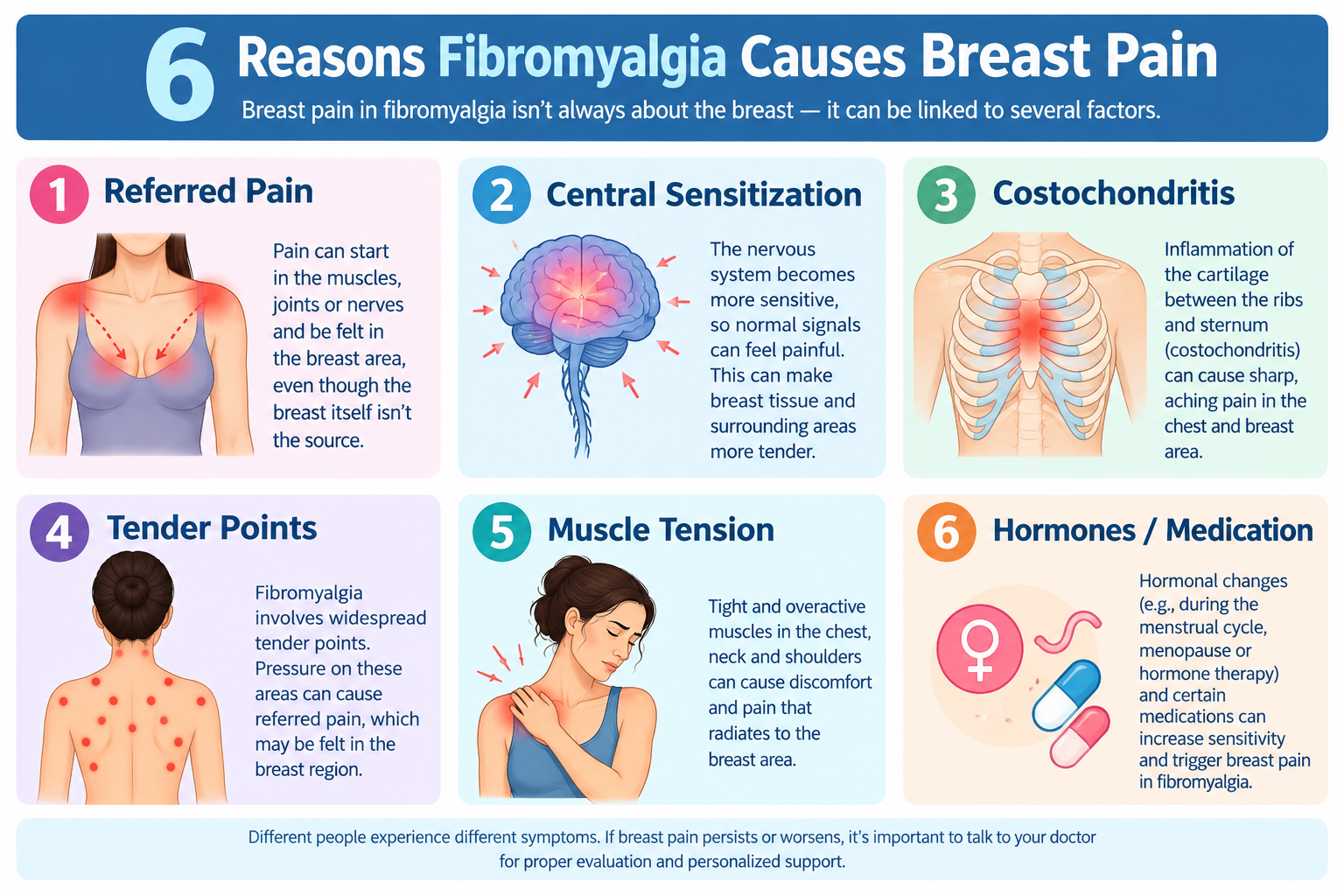
1. Most “breast” pain isn’t coming from the breast at all
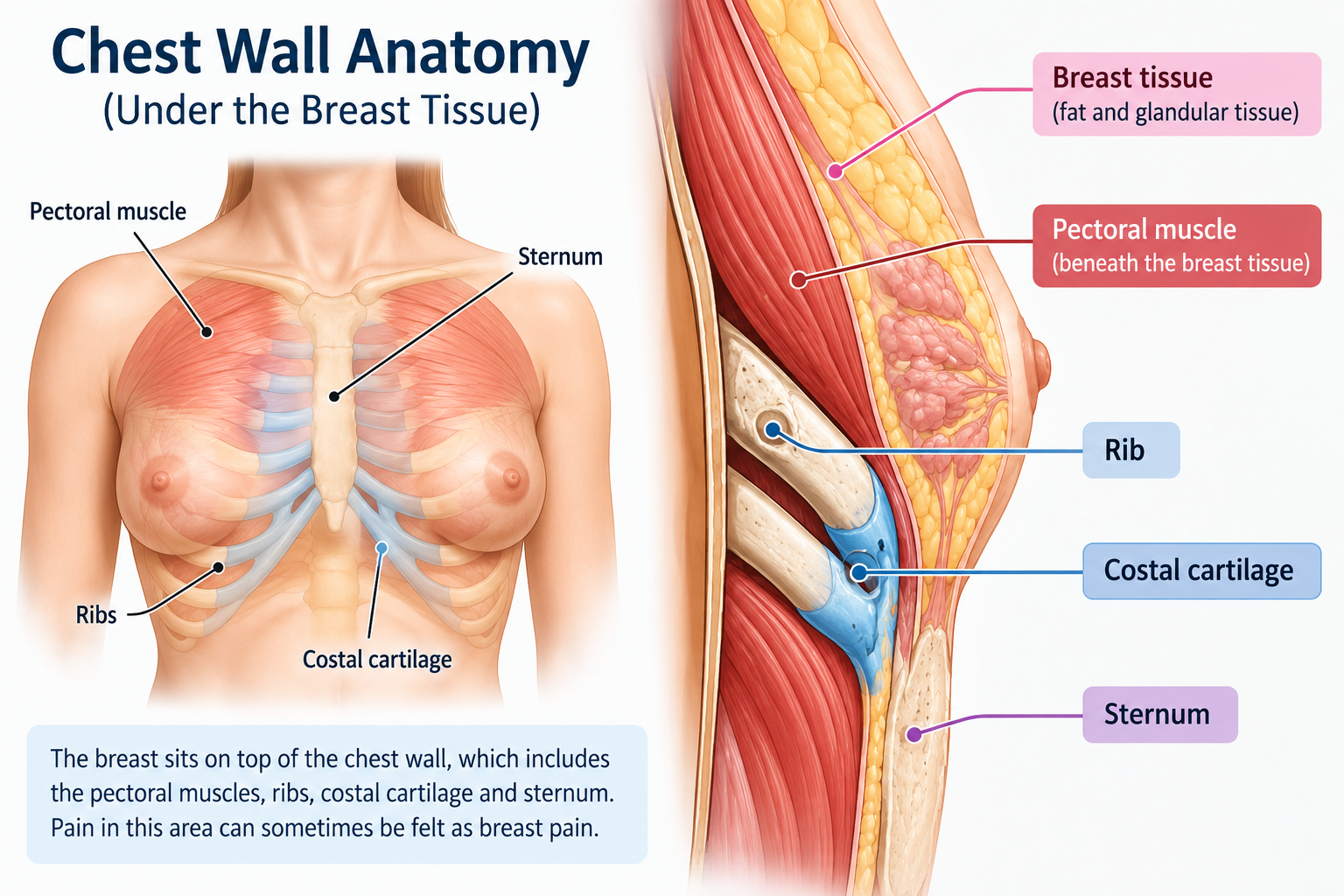
This is the single most useful thing to understand. Clinicians classify breast pain (mastalgia) into three buckets: cyclical, non-cyclical, and extramammary. Extramammary mastalgia describes breast pain that actually originates somewhere outside the breast — the chest wall, ribs, oesophagus, lungs or heart — but is felt in the breast as referred pain.
For people with fibromyalgia, the chest wall is very often the true source. The nerves serving your ribs and the nerves serving your breast skin share overlapping pathways into the spinal cord, so your brain struggles to tell them apart. Irritated rib cartilage gets translated as “my breast hurts.”
2. Central sensitization turns the volume up
Fibromyalgia is fundamentally a disorder of pain processing. The nervous system’s amplifier is stuck on high, so ordinary signals like a bra underwire, a tight muscle, or mild cartilage irritation get delivered as genuine pain. The Mayo Clinic’s fibromyalgia overview explains this amplification in plain language.
This is why fibro breast pain so often flares alongside stress, a bad sleep week, weather swings, or a viral infection. Nothing new happened in the tissue. The processing changed. If you want to map your own patterns, see our post on fibromyalgia flare-up triggers.
Researchers have started making this link explicitly. One line of research frames non-cyclical mastalgia as having a central sensitization component and notes it affects roughly 10% to 25% of women of reproductive age at some point.
3. Costochondritis: the classic fibro chest culprit
Costochondritis is irritation or inflammation where the upper ribs meet the breastbone. It causes pain around the breastbone and ribcage and is considered common in people with fibromyalgia. It’s a benign chest wall pain syndrome, diagnosed by examination and by ruling out other causes, and usually managed with pain relief, anti-inflammatories, heat or ice, rest, and manual therapy. The Cleveland Clinic’s costochondritis guide is a good reference. Benign does not mean brief, though. It can grumble on for weeks or months.
4. Tender points sit exactly where it hurts
The old 18-point tender point map used in historical fibromyalgia diagnosis included a point located just lateral to the second costochondral junction — essentially the upper chest, an inch or two from the breastbone, directly above breast tissue on many bodies. Research using pressure algometry has found the second costochondral junction to be among the most mechanosensitive of all the tender point sites.
In other words: one of the most reliably sensitive spots in the entire fibromyalgia body map sits right where readers report their worst breast pain.
5. Myofascial trigger points and posture
Tight pectoral muscles, forward-rounded shoulders from pain-guarding, shallow chest breathing during flares, and myofascial trigger points all feed into chest wall pain. If you’ve been protecting a sore neck or shoulder for weeks, your chest muscles have been quietly working overtime. Our guide to fibromyalgia muscle pain goes deeper on this.
6. Hormones and medication overlap
Fibromyalgia doesn’t switch off the ordinary causes of breast pain. Hormonal fluctuation, birth control, hormone therapy, and certain antidepressants can all contribute — and notably, SSRIs, hormone therapy, birth control pills, breast cysts, fibroadenomas and costochondritis are all recognised contributors to non-cyclic breast pain. Since many fibro patients take SSRIs or SNRIs, this overlap matters.
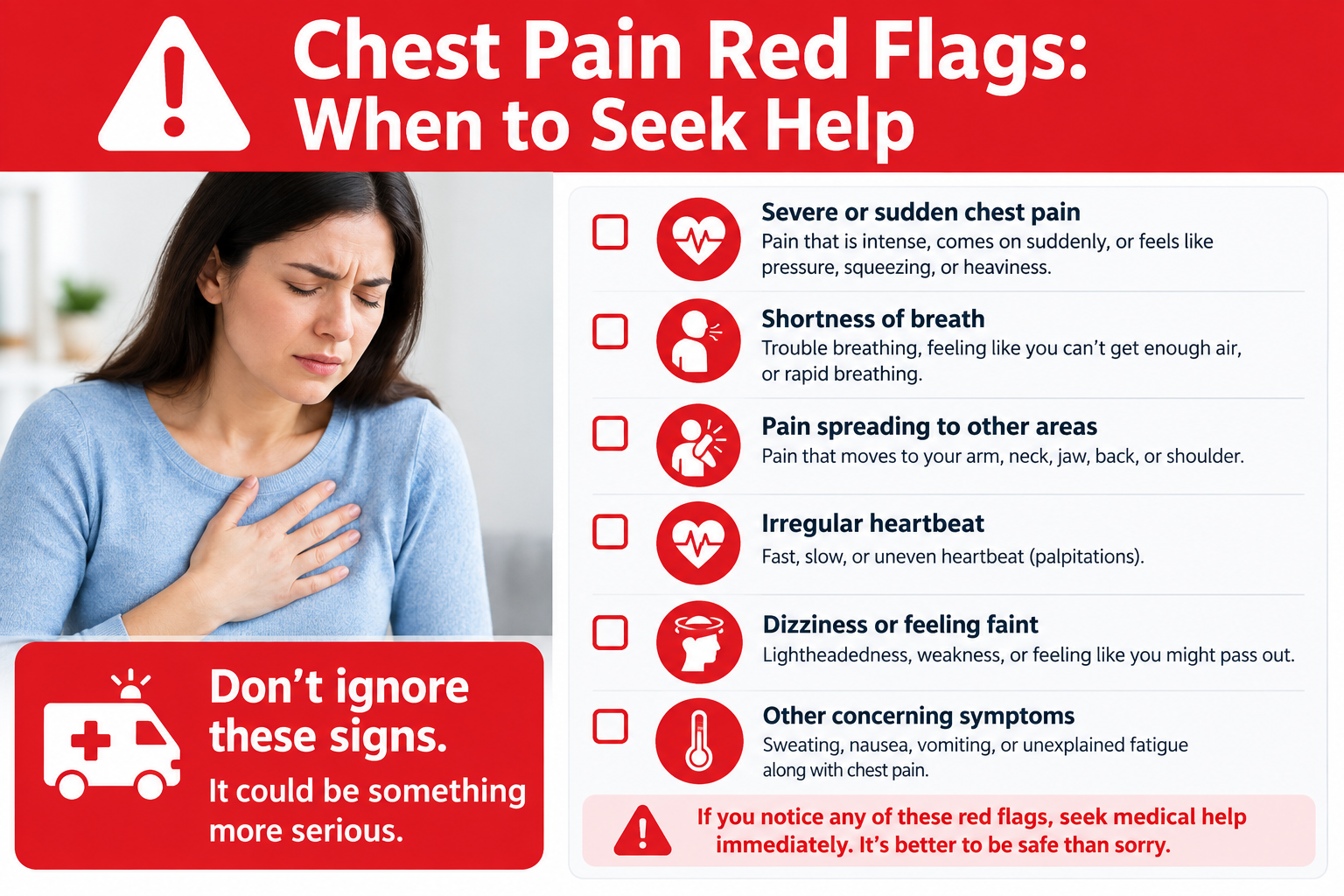
When Breast or Chest Pain Is an Emergency
Please read this section properly. Having fibromyalgia does not protect you from heart disease or breast cancer, and the most dangerous assumption is “it’s just my fibro.”
Call emergency services immediately if you have:
- Crushing chest pressure or squeezing, especially with exertion
- Pain spreading to the jaw, neck, left arm, or between the shoulder blades
- Shortness of breath, cold sweat, nausea, dizziness, or fainting
- A sudden, severe, tearing chest pain
Book a prompt medical appointment (not an emergency, but don’t delay) if you notice:
- A new lump, thickening, or hard area in the breast or armpit
- Skin dimpling, puckering, redness, or an orange-peel texture
- Nipple changes: inversion, crusting, rash, or any discharge (especially bloody)
- Pain in one breast only, in one specific spot, that persists over weeks
- Breast pain with fever, heat, or swelling (possible mastitis or abscess)
- Any pain that is new, changing, or escalating
The NHS guidance on breast pain lists when to see a GP. Fixed, one-sided pain deserves particular respect: studies suggest non-cyclical breast pain is caused by malignancy in up to 4.6% of cases, which is why clinicians are advised to exclude cancerous, inflammatory and vascular causes. That figure isn’t meant to frighten you. It’s meant to give you permission to get imaged rather than talking yourself out of an appointment.
How to Get a Real Diagnosis (and Be Taken Seriously)
Fibro patients get dismissed. Here’s how to stack the deck in your favour.
Track before you go
For two to four weeks, log: date, location (draw it on a simple body outline), pain score out of 10, what made it worse, where you were in your cycle, and what else was flaring. Patterns persuade doctors far more effectively than adjectives.
Ask for the chest wall to be examined
Specifically request that the doctor press along the costochondral junctions — the line where ribs meet the breastbone. If pressing there reproduces your exact pain, that’s meaningful evidence pointing at the chest wall rather than the breast.
Expect (and accept) imaging
Depending on your age and findings, you may be offered an ultrasound or a mammogram. This is good practice, not paranoia. Ruling things out is part of getting your pain believed.
Say the magic sentence
Try: “I know I have fibromyalgia, but I want to make sure we’ve ruled out cardiac and breast causes before we attribute this to fibro.” It reframes you as a careful patient, not an anxious one — and it’s very hard to wave away.
How to Relieve Fibromyalgia Breast Pain During a Flare
Once serious causes are excluded, these are the strategies readers report helping most. Test one at a time so you know what actually works for your body.
Change what touches you
- Switch to a soft, wireless, wide-band bra; underwire pressing on inflamed cartilage is a common hidden trigger
- Get properly fitted — an ill-fitting band drags on the chest wall all day
- Try a front-closing bra or bra-free time at home during flare days
- Seatbelt cushions and padded bag straps genuinely help
Use heat and cold intelligently
Heat relaxes muscle guarding and usually feels better for fibro pain. Cold can help if inflammation is the dominant driver. Twenty minutes maximum, with a barrier layer, and stop if either makes things worse.
Breathe wide, not shallow
Chest-wall pain makes you brace and breathe shallowly, which tightens everything further. Practise diaphragmatic breathing: hand on belly, slow inhale so the belly rises, longer exhale. Five minutes, twice daily. It calms both the muscles and the nervous system driving the amplification.
Move gently, not heroically
- Gentle doorway pec stretches, held 20–30 seconds, well short of sharp pain
- Slow shoulder rolls and scapular squeezes to counter rounding
- Warm-water exercise, which most fibro patients tolerate far better than gym work
- Avoid heavy pushing, pulling, and overhead lifting during an active flare
Pain in other areas too? Our post on fibromyalgia jaw pain covers another spot where flares like to show up.
Protect sleep above all else
Poor sleep is the most reliable amplifier of fibro pain there is. Side-sleeping with a pillow hugged to the chest takes strain off the chest wall. A consistent sleep window matters more than any supplement.
Talk to your prescriber
Options may include topical anti-inflammatory gels over the chest wall, short-course oral NSAIDs, reviewing whether a current medication is contributing, or adjusting your core fibromyalgia medication. Never start long-term NSAIDs without checking for stomach, kidney, or interaction risks.

The Emotional Side Nobody Prepares You For
There’s a specific exhaustion in having a symptom that sounds terrifying and looks like nothing.
That anxiety isn’t a character flaw. It’s also not neutral: fear tightens the chest, alters breathing, and feeds straight back into the pain loop. Addressing it is treatment, not weakness. Pacing, paced breathing, pain-focused CBT, and discussing pain and fear with a trusted person can help reduce symptom intensity.
Key Takeaways
- Fibromyalgia breast pain is common and real, and most often comes from the chest wall rather than from breast tissue itself.
- Costochondritis and tender points near the second rib junction sit exactly where the pain is felt, which explains a great deal of it.
- Central sensitization amplifies ordinary signals into significant pain, especially during flares.
- Red flags override everything — new lumps, skin or nipple changes, one-sided fixed pain, or cardiac symptoms need immediate evaluation.
- Relief comes from stacking small changes: bra fit, heat, diaphragmatic breathing, gentle stretching, sleep protection, and a medication review.
- Fibromyalgia doesn’t make you immune to other conditions. Get checked, then treat the fibro.
Frequently Asked Questions
Can fibromyalgia cause pain in only one breast? Yes. Fibro pain is frequently asymmetrical, and chest wall irritation is often worse on one side. Persistent one-sided pain in a fixed spot warrants imaging, so have it examined before attributing it to fibromyalgia.
Is fibromyalgia breast pain the same as costochondritis? No. Costochondritis is inflammation of rib cartilage; fibromyalgia is a chronic pain-processing condition. They frequently occur together, and costochondritis is a common source of chest pain in fibro patients — but they are separate diagnoses with different treatment emphases.
Does fibromyalgia breast pain come and go? Usually, yes. It typically tracks your flare cycle — worsening with stress, poor sleep, illness, overexertion, and weather changes — and easing during calmer periods.
Can wearing the wrong bra really make it worse? Absolutely. An underwire or tight band presses directly on already-sensitised costal cartilage and chest wall tissue. Switching to a well-fitted wireless bra is one of the cheapest and most consistently reported improvements readers make.
Should I still get a mammogram if I’m sure it’s fibro? Follow your doctor’s guidance and your national screening schedule. Serious causes often go undetected when people rely on self-diagnosis.
Conclusion: Believe Your Body, and Still Get It Checked
Fibromyalgia breast pain sits at the intersection of two things that make people minimise themselves: a condition that’s often doubted, and a body part loaded with fear. The way through is to hold both truths at once — this pain is real and has a physical explanation, and it still deserves proper medical evaluation.
Once serious causes have been ruled out, symptom management may include softer clothing, warmth, slower breathing, protected sleep, gentle movement, and self-compassion.
Taking symptoms seriously does not indicate fragility.