
If you live with fibromyalgia, you already know the feeling: one day you’re functioning fine, and the next, your body feels like it’s fighting you from the inside out. That shift rarely happens without warning. Most people who’ve lived with fibromyalgia for a while will tell you the same thing — their body sends signals before a full flare-up hits. The trouble is, those signals are easy to miss, dismiss, or confuse with “just a bad day.”
I’ve spent years talking to people managing chronic pain conditions, and one theme comes up again and again: catching a fibromyalgia flare-up early can mean the difference between a rough 48 hours and a rough two weeks. This article breaks down the ten most common early warning signs, why they happen, and what you can actually do when you notice them creeping in.
This isn’t medical advice. It’s a practical, experience-based guide to help you recognize your own patterns sooner. Always talk to your doctor or rheumatologist{:target=”_blank” rel=”noopener”} about your specific symptoms and treatment plan.
What Exactly Is a Fibromyalgia Flare-Up?
Before the warning signs, it helps to understand what’s happening. A flare-up is a temporary but significant worsening of symptoms: widespread pain, fatigue, brain fog, and sleep disruption. It’s often set off by stress, weather changes, overexertion, poor sleep, illness, or hormonal shifts.
Flares aren’t random. They tend to follow a build-up phase where smaller symptoms appear first, almost like a check-engine light before the whole system stalls. If you’re still learning what to look for in general, my post on the early signs and symptoms of fibromyalgia is a good place to start.
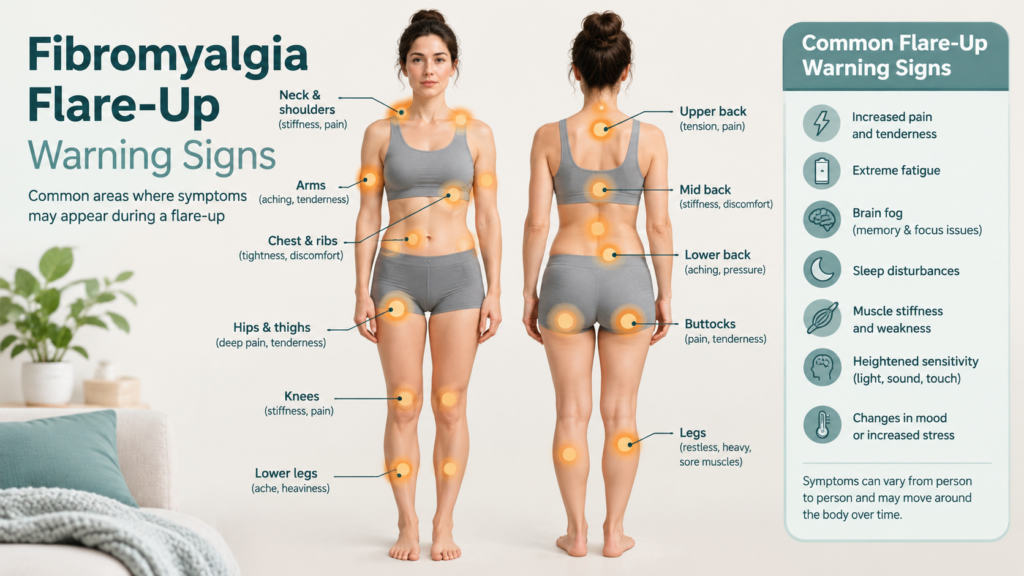
The 10 Early Warning Signs of a Fibromyalgia Flare-Up
1. Increased Fatigue That Sleep Doesn’t Fix
One of the earliest and most reliable signs is a fatigue that feels different from normal tiredness. You might sleep eight hours and still wake up feeling like you ran a marathon. This “unrefreshing sleep” pattern is a hallmark of pre-flare fatigue and often shows up 24–72 hours before pain symptoms intensify.
2. Sudden Muscle Stiffness, Especially in the Morning
If your usual morning stiffness lasts longer than normal or spreads to new areas, pay attention. Many people describe it as being “cast in concrete overnight.” If the stiffness turns into deeper aching, my guide to fibromyalgia muscle pain covers what helps.
3. Brain Fog and Word-Finding Trouble (“Fibro Fog”)
Struggling to find the right word, losing your train of thought mid-sentence, or forgetting simple tasks can intensify right before a flare. Cognitive symptoms often precede physical pain by a day or two, making them a useful early indicator if you track them.
4. Heightened Sensitivity to Light, Noise, or Touch
Sudden intolerance to bright lights, loud rooms, or even the seam of your shirt can mean your nervous system is ramping up. This sensory overload ties back to central sensitization{:target=”_blank” rel=”noopener”}, a key mechanism behind fibromyalgia symptoms.
5. Mood Shifts — Irritability, Anxiety, or Low Mood
Emotional changes often show up before physical ones. Increased irritability, anxiety spikes, or a sudden low mood aren’t “just stress” — they can be a direct neurological signal that a flare is building, since fibromyalgia affects the same pain-processing pathways involved in mood regulation.
6. Headaches or Migraines Starting Earlier Than Usual
For many people with fibromyalgia, tension headaches or migraines are common flare companions. An unexpected headache showing up out of your normal pattern can be an early red flag worth noting.
7. Digestive Changes (Bloating, Nausea, IBS Flares)
Fibromyalgia often overlaps with irritable bowel syndrome{:target=”_blank” rel=”noopener”}. More bloating, stomach discomfort, or sudden digestive irregularity often appears in the same window as the other early signs, likely because of the gut-nervous system connection.
8. Increased Sensitivity to Weather Changes
Many people notice they can “feel” a storm coming before the weatherman announces it. Barometric pressure drops, humidity spikes, or sudden temperature changes are commonly reported flare triggers, and the early ache that comes with them is worth tracking.
9. Restless or Disrupted Sleep the Night Before
Even if you’re not in significant pain yet, restless sleep, frequent waking, or difficulty falling asleep the night before a flare is extremely common. This disrupted sleep and pain sensitivity often feed into each other, creating a cycle that intensifies the coming flare.
10. A Subtle Increase in Baseline Pain
Sometimes the earliest sign is simply this: your “normal” pain — the manageable, background-level discomfort you live with daily — ticks up slightly. It’s not severe yet, but it’s noticeably different from your usual baseline. This subtle shift is often the clearest early signal once you learn to recognize it.
Why Recognizing These Signs Early Matters
Catching these warning signs early gives you a window to act — adjusting activity levels, prioritizing rest, hydrating, or using whatever coping strategies work for your body — before the flare fully sets in. Many people who track their symptoms report shorter, less intense flares simply because they respond sooner rather than pushing through until the pain forces them to stop.
A simple symptom journal (paper or app-based) can help you spot your own personal pattern. Everyone’s early warning signs look a little different, so the goal isn’t to match this list exactly — it’s to learn your own body’s language.
How a Flare-Up Differs From Your Everyday Baseline
New readers often ask: “How do I know if this is a flare-up or just a bad symptom day?” It’s a fair question, because fibromyalgia symptoms fluctuate constantly even outside of flares.
The key difference is pattern and duration. A bad hour or a rough afternoon is common. A flare-up is a sustained escalation — usually 3 or more of the warning signs above showing up together, lasting more than a day, and interfering with your ability to function at your normal level. If your pain, fatigue, and fog all spike at once and stay elevated, that’s a strong signal you’ve crossed from “bad day” into “flare territory.”
Keeping a simple 1–10 scale for pain, fatigue, and mood each day — even just jotted in a notes app — makes this distinction much easier to see over time. Patterns that feel invisible day-to-day often become obvious once you look back over two or three weeks of entries.
What to Do the Moment You Notice Early Signs
Recognizing the signs is only half the battle — knowing how to respond is what actually shortens or softens a flare. Here’s what many people with fibromyalgia find helpful the moment early symptoms appear:
- Scale back activity immediately. Don’t wait for pain to force you to stop. If you notice two or more early signs, treat that as your cue to lighten your schedule for the next 24–48 hours.
- Prioritize sleep hygiene. Since disrupted sleep is both an early sign and a flare accelerant, a consistent wind-down routine (dim lights, no screens, consistent bedtime) can help break the cycle.
- Hydrate and eat consistently. Skipped meals and dehydration can intensify fog and fatigue, adding fuel to a building flare.
- Choose gentle movement, not intense exercise. Light stretching or a short walk can ease stiffness, while high-intensity workouts often backfire in the early stages.
- Reduce sensory load. Dim the lights, lower notification sounds, and give your nervous system fewer inputs to process.
- Reach out for support. Letting a partner, friend, or coworker know you’re heading into a flare can take pressure off you to “push through” and perform normally.
None of these strategies guarantee a flare won’t happen — fibromyalgia doesn’t work that way — but responding early, rather than reactively, consistently shows up in patient reports as a way to blunt the intensity and shorten the recovery window.
Common Myths About Fibromyalgia Flare-Ups
It’s worth clearing up a few misconceptions that make flare management harder than it needs to be:
Myth: “If you just push through, it’ll pass faster.” For many chronic pain conditions, this isn’t true — and with fibromyalgia, overexertion during early warning signs often makes the flare worse and longer, not shorter.
Myth: “Flares only happen because of something you did wrong.” Flares are frequently triggered by things entirely outside your control — weather shifts, illness, hormonal changes, or even good stress like an exciting event. Self-blame doesn’t change the biology.
Myth: “Once you’re flaring, there’s nothing you can do.” While you can’t always stop a flare once it’s underway, early intervention — even after it’s begun — can still reduce its intensity and help you recover a few days sooner than if you ignore it entirely.
Building Your Own Early-Warning Checklist
Because fibromyalgia looks different from person to person, the most useful version of this list is the one you build yourself. Consider keeping a simple weekly log with columns for:
- Sleep quality (1–10)
- Pain level (1–10)
- Fatigue level (1–10)
- Mood/anxiety notes
- Any new or unusual symptoms
- Weather or stress events that day
After a month or two, patterns tend to emerge — maybe your fog always shows up two days before a flare, or your mood dips a full day before the pain does. That personalized map becomes one of the most valuable tools you have for staying ahead of your symptoms rather than reacting to them.

Frequently Asked Questions
1. How long do fibromyalgia flare-ups usually last? Flares can last anywhere from a few days to several weeks, depending on the trigger, how early it’s managed, and individual factors.
2. Can stress alone trigger a flare-up? Yes. Emotional and physical stress are among the most commonly reported fibromyalgia flare triggers.
3. Is it possible to prevent a flare-up completely? Not always, but recognizing early warning signs and adjusting activity, rest, and stress levels can often reduce the severity and duration.
4. Should I see a doctor every time I notice early signs? Not necessarily, but if flares are becoming more frequent, longer, or harder to manage, it’s worth discussing with your healthcare provider.
Conclusion
Living with fibromyalgia means learning to listen closely to your body — and that starts with recognizing the quiet signals it sends before a full flare-up arrives. Fatigue that sleep doesn’t touch, stiffness that lingers, fog that creeps in, and a baseline ache that ticks up slightly are all part of the same early-warning language. The more familiar you become with your own patterns, the more control you gain over how you respond.
If this helped you recognize a pattern in your own flares, share it with someone else navigating fibromyalgia, and explore the rest of our flare-up management guides for more practical strategies.