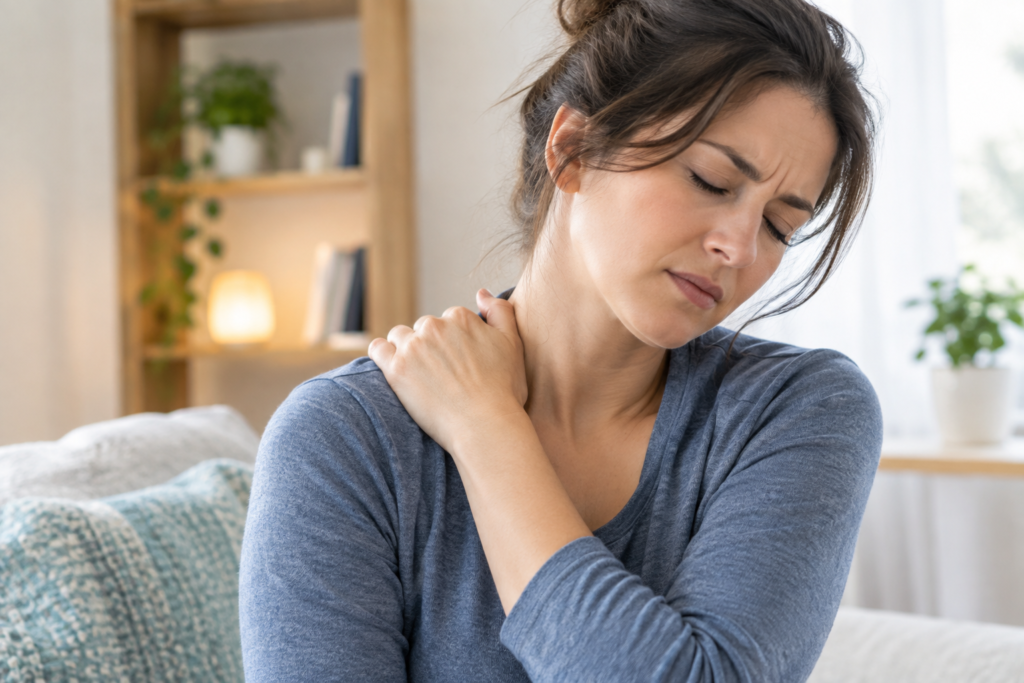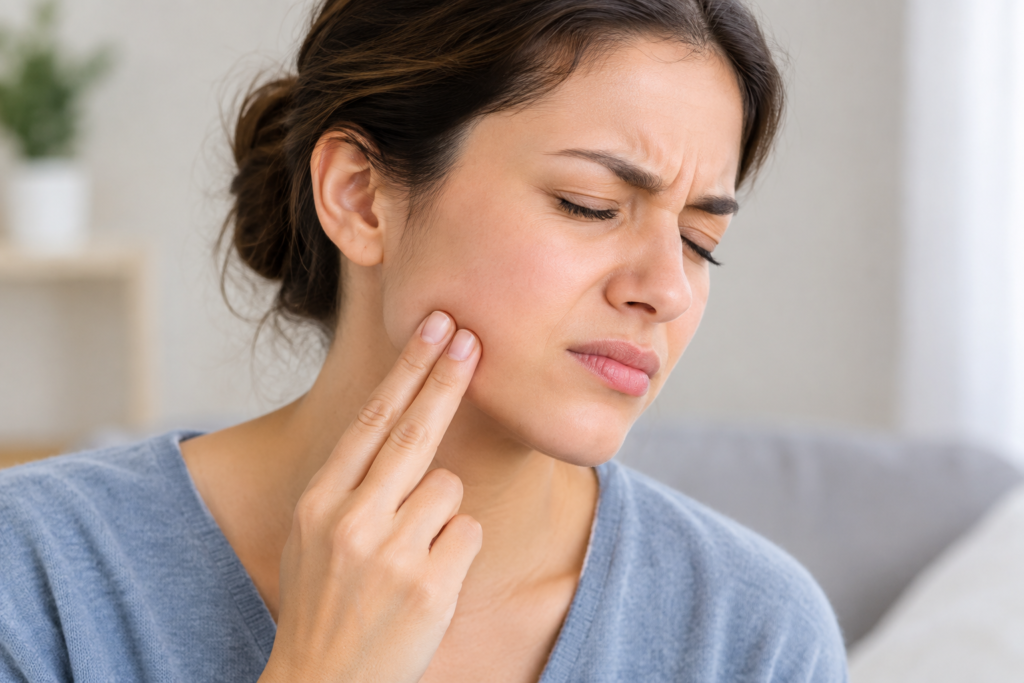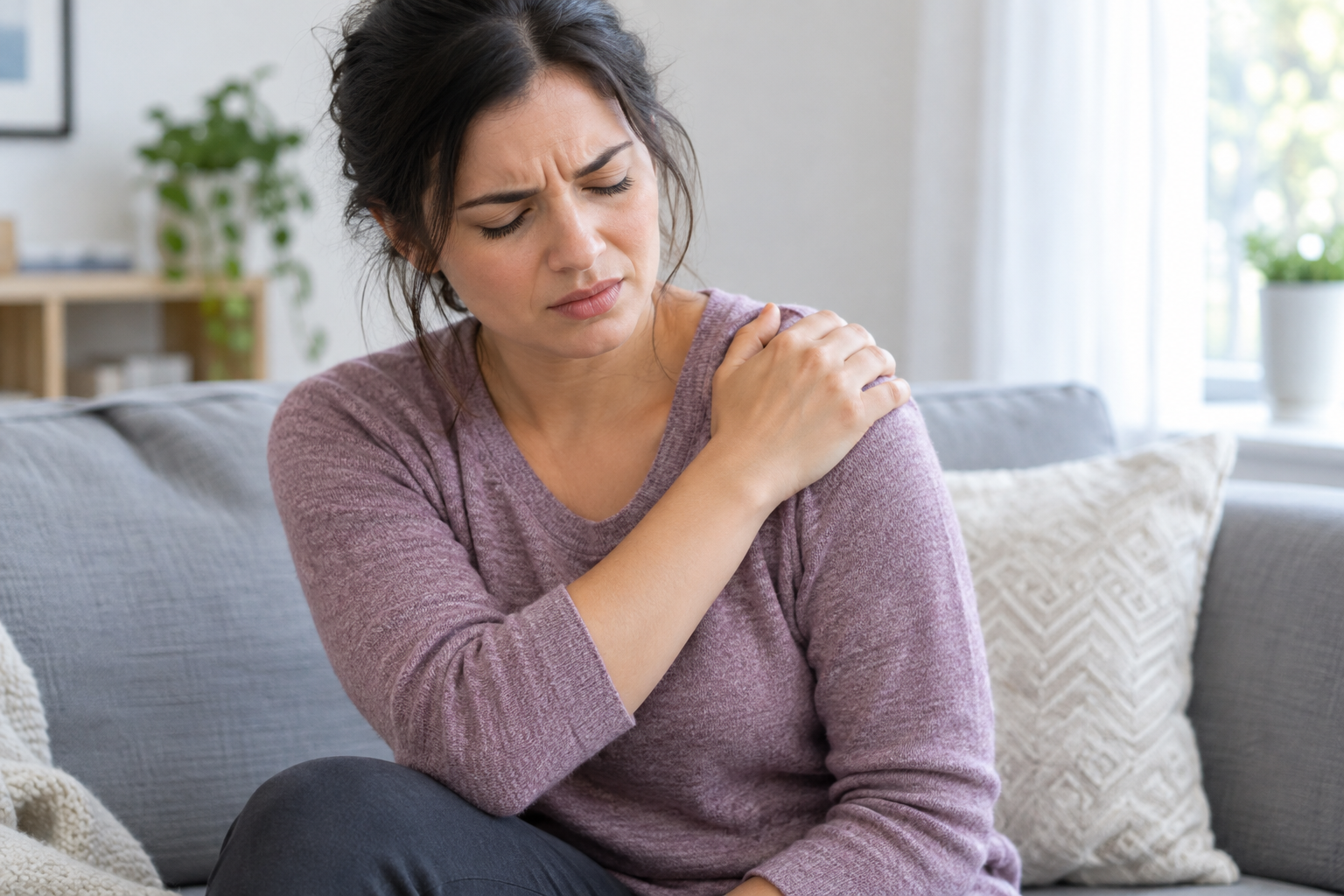
I still remember the first time a reader messaged me describing “flu-like pain that never turns into the flu.” She’d been to four doctors. Two blamed stress. One suggested she “exercise more.” The fourth finally said the word: fibromyalgia.That story isn’t rare — it’s the norm. Fibromyalgia symptoms in females show up in ways that are frequently dismissed, misread as anxiety, or blamed on “just getting older.
” Women make up the overwhelming majority of diagnosed cases, yet the average time to an accurate diagnosis still stretches into years for many patients. This guide breaks down exactly what fibromyalgia looks like in the female body, why it behaves differently than it does in men, and what you can actually do about it — based on current research and the patterns I’ve seen reported again and again in this community.
What Is Fibromyalgia, Exactly?
Fibromyalgia is a chronic central nervous system disorder that amplifies the way the brain and spinal cord process pain signals. It isn’t caused by damaged joints, inflamed tissue, or muscle injury — imaging and blood tests almost always come back “normal,” which is exactly why it’s so often disbelieved or misdiagnosed. Instead, the nervous system itself becomes hypersensitive, turning up the volume on pain, touch, temperature, and even sound and light.
Global prevalence estimates put fibromyalgia at roughly 2–4% of the general population, translating to more than four million adults in the United States alone. Across nearly every study, women are diagnosed at significantly higher rates than men, and research consistently shows they also tend to report more widespread pain and more severe overall symptom burden.
Why Fibromyalgia Hits Women Harder
There isn’t one single explanation — most researchers point to a combination of overlapping factors:
1. Hormonal Fluctuation
Estrogen plays a role in regulating pain perception. As estrogen levels rise and fall across the menstrual cycle, pregnancy, and menopause, pain sensitivity can shift along with it — which is why many women notice their symptoms are far worse in certain weeks of the month.
2. Nervous System Differences
Some research suggests women’s central nervous systems process and amplify pain signals differently than men’s, which may partly explain higher tender-point counts during diagnostic exams.
3. Overlapping Conditions
Fibromyalgia rarely travels alone. It frequently overlaps with conditions that are themselves more common in women, including irritable bowel syndrome (IBS), overactive bladder, migraines, and interstitial cystitis. A 2026 clinical study of women with fibromyalgia found that those who also had IBS or overactive bladder symptoms reported significantly higher overall symptom severity scores than those without the overlap.
4. Diagnostic Delay
Because early symptoms like fatigue, “brain fog,” and generalized aching mirror stress, depression, or thyroid issues, many women are told their symptoms are psychological long before fibromyalgia is even considered.
Core Fibromyalgia Symptoms in Females
While symptoms vary from person to person, most women describe a recognizable cluster:
- Widespread musculoskeletal pain – a persistent dull ache on both sides of the body, above and below the waist, lasting three months or more
- Profound, unrefreshing fatigue – waking up exhausted even after eight or more hours of sleep
- “Fibro fog” – difficulty concentrating, word-finding trouble, and short-term memory lapses
- Non-restorative sleep – frequent waking, light sleep, and restless legs
- Tender points – heightened sensitivity in specific soft-tissue areas like the neck, shoulders, hips, and knees
- Headaches and migraines
- Digestive issues, including bloating, cramping, and IBS-like symptoms
- Numbness or tingling in the hands and feet
- Heightened sensitivity to cold, noise, bright light, and certain smells
- Mood changes, including anxiety and low mood tied to chronic pain and poor sleep
Symptoms That Show Up More Often — or More Intensely — in Women
Beyond the core list above, several patterns appear disproportionately in female patients:
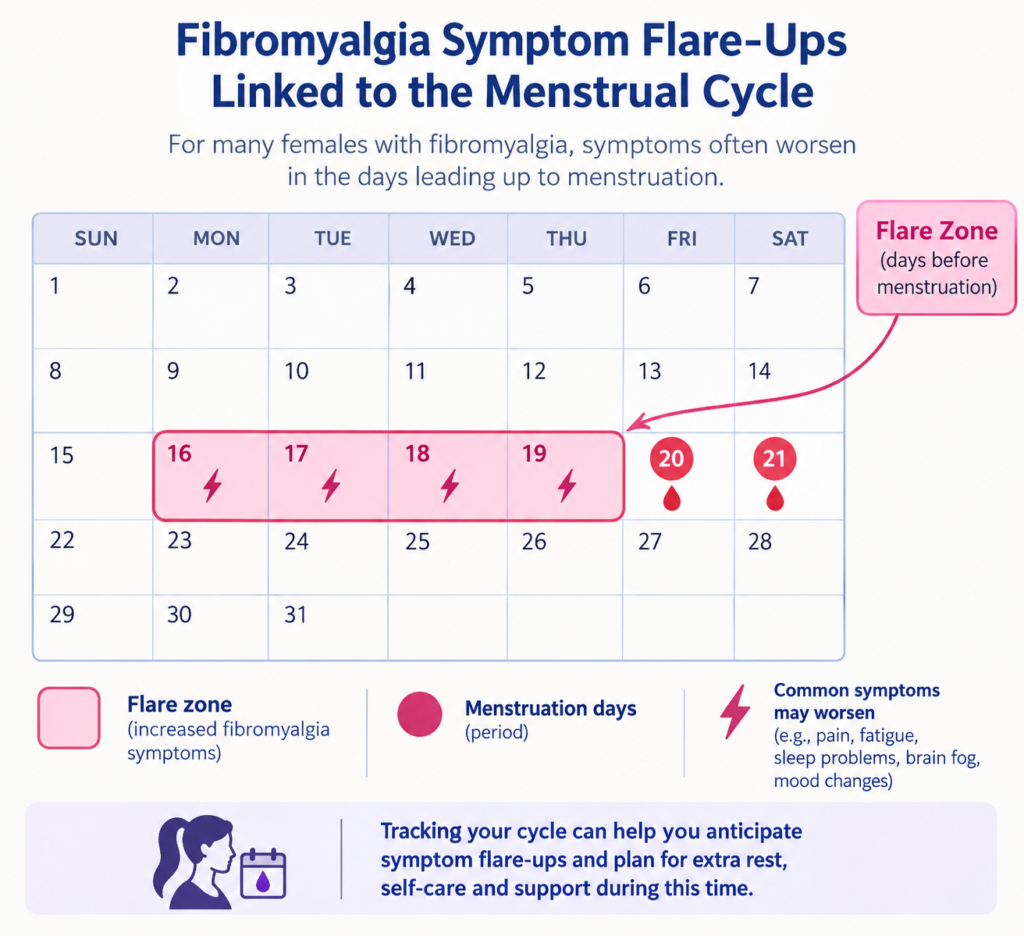
Menstrual Cycle Flare-Ups
Many women report a clear pattern: pain, fatigue, and brain fog intensify in the days leading up to their period, then ease slightly afterward. This lines up with estrogen and progesterone dropping sharply before menstruation.
Pelvic and Bladder Symptoms
Overactive bladder and pelvic pain show up far more frequently in women with fibromyalgia than in men, and research links this overlap to greater overall symptom severity.
Pregnancy and Postpartum Changes
Some women experience temporary symptom relief during pregnancy due to hormonal shifts, while others report a significant flare postpartum, when hormones drop and sleep is disrupted.
Perimenopause and Menopause
The hormonal turbulence of perimenopause is one of the most commonly reported flare triggers among women in their 40s and 50s, sometimes bringing on a first diagnosis at this stage of life.
Jaw, Face, and TMJ-Related Pain
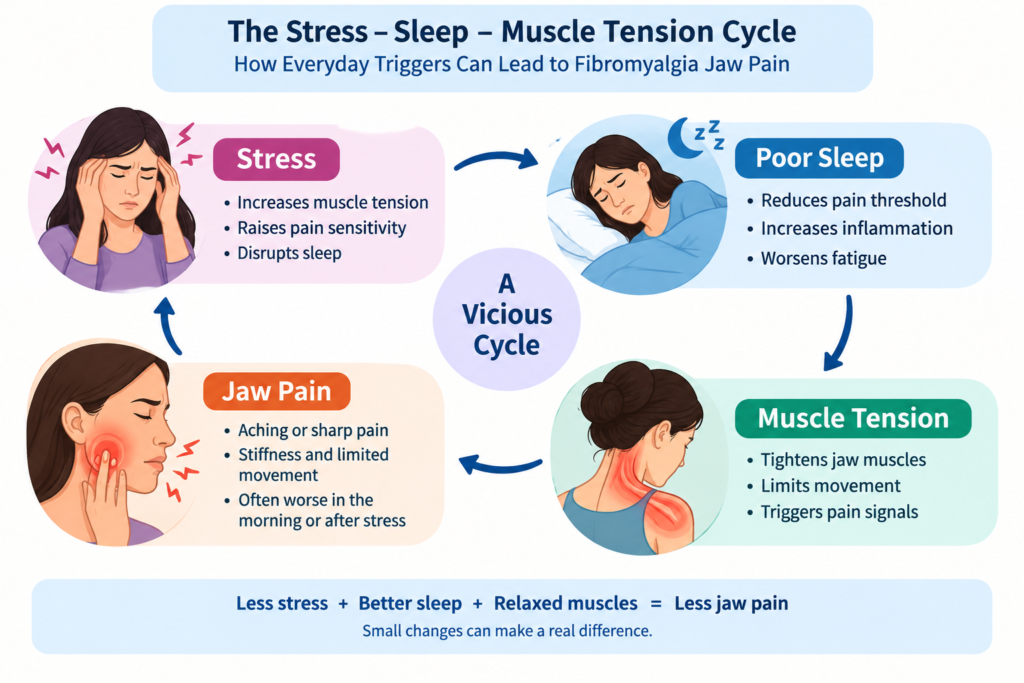
Jaw tension and facial pain are reported at notably higher rates in women, often overlapping with TMJ disorders. (For a deeper dive, see our related guide on fibromyalgia jaw pain.)
Why Misdiagnosis Is So Common
Because there’s no blood test, scan, or biomarker that confirms fibromyalgia, diagnosis relies on clinical criteria — primarily the Widespread Pain Index (WPI) and Symptom Severity Scale (SSS). In the meantime, many women are cycled through diagnoses for depression, anxiety, chronic fatigue syndrome, or “just stress” before a clinician finally considers fibromyalgia.
A cross-sectional study among medical students found that even in a young, health-literate population, nearly 20% reported fibromyalgia-consistent symptoms — with fatigue, non-restorative sleep, and depressive symptoms among the most common — underscoring how easily these overlapping symptoms get attributed to something else entirely.
Red flags that warrant a fibromyalgia workup include:
- Widespread pain lasting longer than three months with no clear injury
- Pain that moves or changes location over time
- Fatigue that isn’t relieved by rest
- Cognitive symptoms alongside physical pain
- A family history of fibromyalgia (first-degree relatives have a notably higher risk)
Managing Symptoms Day to Day
There’s currently no cure, but most women find meaningful relief through a combined approach rather than a single fix:
- Medication, tailored to individual symptoms (pain, sleep, mood) under a doctor’s guidance
- Gentle, paced movement such as walking, swimming, or yoga — pushing too hard too fast is a common flare trigger, which is exactly what our guide on fibromyalgia flare-up triggers covers in detail
- Sleep hygiene, since deep sleep is when the body does much of its pain-regulation work
- Stress management, including therapy, mindfulness, or support groups
- Tracking your cycle, so you can anticipate hormone-linked flares instead of being blindsided by them
- Pacing activities across the week instead of “crashing and boom-and-busting” through good days
For muscle-specific pain management strategies, our article on fibromyalgia muscle pain walks through targeted relief techniques.

Key Takeaways
- Fibromyalgia is a nervous-system pain amplification disorder, not a muscle or joint disease, and standard tests come back normal.
- Women are diagnosed far more often than men and tend to report more severe, more widespread symptoms.
- Hormonal fluctuation — menstrual cycle, pregnancy, and menopause — is one of the biggest female-specific symptom drivers.
- Overlapping conditions like IBS and overactive bladder are common and can intensify overall symptom severity.
- Diagnosis relies on clinical criteria (WPI/SSS), not a single test, which is a major reason misdiagnosis is so common.
- Combining medication, paced movement, sleep support, and stress management gives the most reliable relief.
FAQ
Q: At what age do fibromyalgia symptoms in females usually start? A: Most women are diagnosed between ages 20 and 50, though symptoms can begin earlier or emerge for the first time during perimenopause.
Q: Can fibromyalgia symptoms get worse right before your period? A: Yes — many women report a noticeable flare in pain, fatigue, and brain fog in the days before menstruation, linked to the drop in estrogen and progesterone.
Q: Is fibromyalgia the same thing as chronic fatigue syndrome? A: They overlap significantly and share fatigue as a core symptom, but fibromyalgia is defined primarily by widespread pain, while chronic fatigue syndrome centers on profound, unexplained exhaustion.
Q: Can fibromyalgia symptoms improve during pregnancy? A: Some women report temporary improvement during pregnancy due to hormonal shifts, while others experience a flare postpartum — the response varies from person to person.
Conclusion
Fibromyalgia in women isn’t “all in your head,” and it isn’t just generic body pain — it’s a distinct, hormone-influenced pattern that deserves to be recognized on its own terms. If the symptoms above sound familiar, don’t let a normal blood test talk you out of pushing for answers. Bring a symptom diary to your next appointment, track how your pain shifts across your cycle, and advocate for the WPI/SSS diagnostic criteria if a provider seems unsure where to start.
Have you noticed your own symptoms shifting with your cycle or life stage? Share your experience in the comments below, or explore our related guides on fibromyalgia jaw pain, fibromyalgia muscle pain, and flare-up triggers to keep building your own management toolkit.
External Authoritative Sources
- Office on Women’s Health — womenshealth.gov/a-z-topics/fibromyalgia
- National Institute of Arthritis and Musculoskeletal and Skin Diseases (NIAMS) — niams.nih.gov
- Mayo Clinic — mayoclinic.org (fibromyalgia overview)