Although fibromyalgia is not considered life-threatening, it can greatly affect a person’s quality of life. Symptoms often fluctuate, with periods of improvement followed by painful flare-ups. Understanding fibromyalgia symptoms, diagnosis methods, treatment options, and coping strategies can help patients better manage the condition.
What Is Fibromyalgia Syndrome?
Fibromyalgia syndrome is a chronic pain disorder characterized by widespread musculoskeletal pain combined with several additional physical and emotional symptoms. It is referred to as a “syndrome” because it involves a group of symptoms rather than a single identifiable cause.
Millions of people worldwide live with fibromyalgia. Women are diagnosed more frequently than men, although the condition can affect people of all ages and backgrounds.
Why Fibromyalgia Is Difficult to Understand
One of the biggest challenges with fibromyalgia is that many symptoms are invisible. A person may appear physically healthy while experiencing severe pain, exhaustion, or mental fatigue internally. This often leads to misunderstanding from others, including employers, friends, and even family members.
Fibromyalgia symptoms can also resemble other medical conditions, which sometimes delays diagnosis.
Common Fibromyalgia Symptoms
Fibromyalgia affects each person differently. Some individuals experience mild symptoms, while others struggle with severe physical and emotional discomfort.
Widespread Chronic Pain in Fibromyalgia
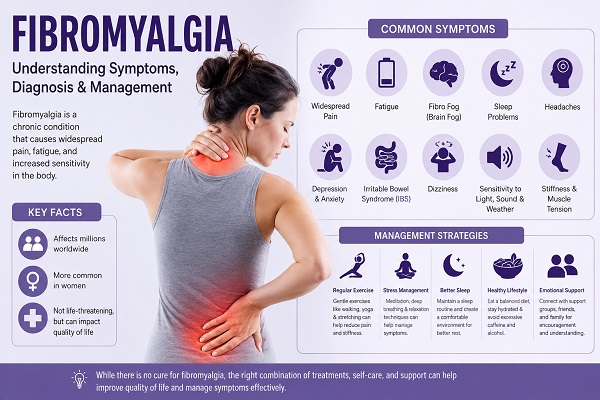
Persistent widespread pain is the most common symptom of fibromyalgia. Patients often describe the pain as:
- Aching
- Burning
- Throbbing
- Stabbing
- Deep muscle soreness
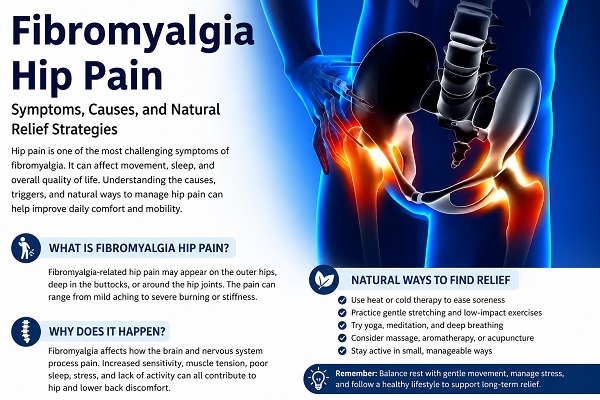
The discomfort may occur on both sides of the body and often affects the neck, shoulders, back, hips, arms, and legs.
Extreme Pain Sensitivity
People with fibromyalgia commonly experience heightened pain sensitivity. Even mild pressure, temperature changes, or physical activity may feel unusually painful. This condition is sometimes linked to abnormal pain processing in the nervous system.
Fibromyalgia Fatigue and Low Energy
Fatigue associated with fibromyalgia goes beyond normal tiredness. Many patients wake up feeling exhausted even after a full night’s sleep.
Common fatigue-related symptoms include:
- Lack of energy
- Muscle weakness
- Difficulty completing daily tasks
- Reduced physical stamina
- Daytime exhaustion
Sleep Problems and Fibromyalgia
Sleep disturbances are extremely common among fibromyalgia patients. Poor sleep quality may worsen pain and fatigue, creating a difficult cycle.
Common Sleep Issues Include:
- Difficulty falling asleep
- Frequent waking during the night
- Restless sleep
- Waking up stiff and exhausted
- Sleep disorders such as restless legs syndrome
Cognitive Problems and Fibro Fog
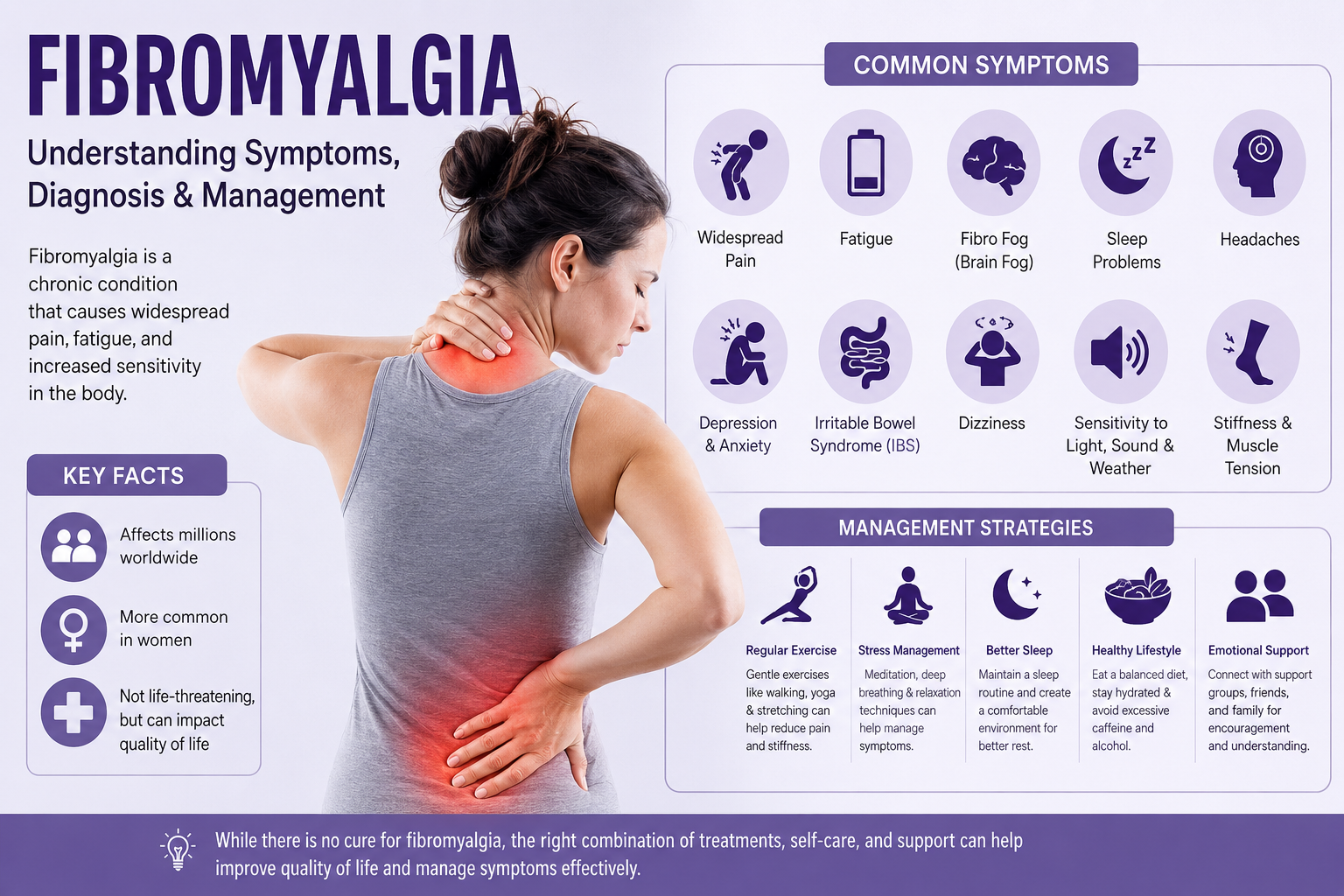
Many people with fibromyalgia experience cognitive difficulties commonly called “fibro fog.”
Symptoms may include:
- Memory problems
- Difficulty concentrating
- Mental confusion
- Slower thinking
- Trouble finding words
These symptoms can interfere with work, school, and daily responsibilities.
Additional Fibromyalgia Symptoms
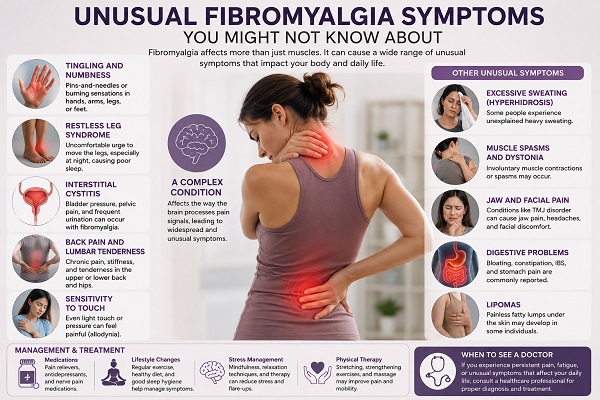
Fibromyalgia may also cause:
- Headaches or migraines
- Irritable bowel syndrome (IBS)
- Anxiety and depression
- Mood swings
- Tingling sensations in hands and feet
- Dizziness or balance problems
- Sensitivity to light, noise, smells, or weather changes
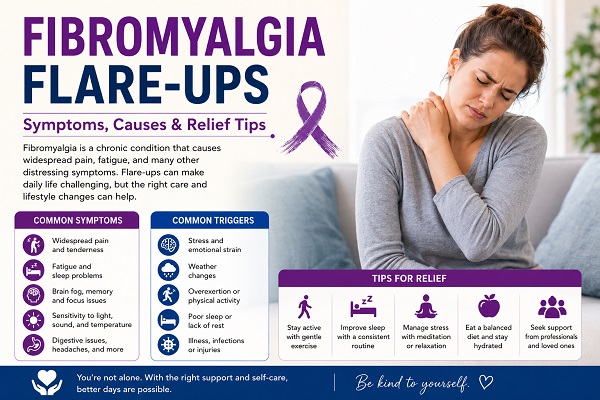
Symptoms often vary in intensity and may worsen during stress, illness, lack of sleep, or physical overexertion.
What Causes Fibromyalgia?
The exact cause of fibromyalgia remains unknown. However, researchers believe several factors may contribute to the condition.
Possible Fibromyalgia Risk Factors
Genetics and Family History
Fibromyalgia sometimes runs in families, suggesting a possible genetic connection.
Physical or Emotional Trauma
Some individuals develop fibromyalgia after:
- Car accidents
- Injuries
- Surgery
- Severe emotional stress
- Traumatic experiences
Nervous System Changes
Researchers believe fibromyalgia may involve changes in how the brain and nervous system process pain signals. This may explain why patients experience heightened pain sensitivity.
Infections and Illnesses
Certain viral infections or illnesses may trigger or worsen fibromyalgia symptoms in some people.
How Fibromyalgia Is Diagnosed
Diagnosing fibromyalgia can be complicated because there is no single laboratory test or scan that confirms the condition.
Medical Evaluation for Fibromyalgia Diagnosis
Healthcare providers usually diagnose fibromyalgia by:
- Reviewing symptoms and medical history
- Assessing widespread pain lasting longer than three months
- Evaluating fatigue and sleep problems
- Ruling out other conditions with similar symptoms
Doctors may order blood tests or imaging studies to exclude illnesses such as arthritis, lupus, thyroid disorders, or chronic fatigue syndrome.
Why Fibromyalgia Is Often Misdiagnosed
Because fibromyalgia symptoms overlap with many other conditions, patients are sometimes misdiagnosed or dismissed before receiving proper care. Some people may spend years searching for answers before receiving a diagnosis.
Emotional Effects of Living With Fibromyalgia
Living with chronic pain and exhaustion can significantly affect mental and emotional health.
Anxiety and Depression in Fibromyalgia Patients
Many individuals with fibromyalgia experience:
- Anxiety
- Depression
- Emotional stress
- Frustration
- Feelings of isolation
The unpredictability of symptoms may also affect relationships, employment, and social life.
The Importance of Emotional Support
Support from healthcare providers, family members, and friends can make a major difference. Counseling or support groups may also help patients manage emotional challenges more effectively.
Fibromyalgia Treatment Options
There is currently no cure for fibromyalgia, but many treatments may help reduce symptoms and improve quality of life.
Medications for Fibromyalgia Pain Relief
Doctors may recommend medications to help manage symptoms, including:
- Pain relievers
- Antidepressants
- Sleep-support medications
- Medications that affect nerve pain signals
Treatment plans vary depending on individual symptoms and medical history.
Exercise and Physical Therapy for Fibromyalgia
Regular movement is considered one of the most effective ways to manage fibromyalgia symptoms.
Best Exercises for Fibromyalgia Patients
Low-impact activities may help improve flexibility, sleep quality, and muscle function.
Recommended exercises include:
- Walking
- Swimming
- Stretching routines
- Yoga
- Tai chi
- Light aerobic exercise
Starting slowly and increasing activity gradually is important to avoid worsening symptoms.
Stress Management and Fibromyalgia Relief
Stress can trigger or intensify fibromyalgia flare-ups. Learning stress management techniques may help reduce symptom severity.
Helpful Stress Reduction Techniques
Patients often benefit from:
- Deep breathing exercises
- Meditation
- Relaxation therapy
- Mindfulness practices
- Gentle massage
- Warm baths or heat therapy
Creating a balanced routine that includes rest and self-care can also improve symptom management.
Alternative Therapies for Fibromyalgia
Some individuals explore complementary therapies to manage symptoms naturally.
Popular Alternative Fibromyalgia Therapies
Possible options include:
- Acupuncture
- Biofeedback
- Chiropractic care
- Massage therapy
- Herbal approaches
- Mind-body therapies
While some patients report symptom relief, results vary, and alternative therapies should not replace professional medical care.
Living Successfully With Fibromyalgia
Although fibromyalgia can be challenging, many people learn to manage the condition effectively and maintain productive lives.
Practical Daily Tips for Fibromyalgia Patients
Create a Consistent Routine
Maintaining regular sleep schedules, meal times, and activity levels may help stabilize symptoms.
Avoid Overexertion
Pushing the body too hard can trigger flare-ups. Balancing activity with adequate rest is important.
Learn Personal Triggers
Keeping track of symptom patterns may help identify triggers such as:
- Stress
- Poor sleep
- Weather changes
- Certain physical activities
Build a Strong Support Network
Supportive relationships can reduce emotional stress and improve coping abilities.
How Fibromyalgia Affects Relationships and Daily Life
Fibromyalgia often changes how individuals interact with family, work, and social responsibilities.
Because symptoms are largely invisible, patients may feel misunderstood by others. Open communication about limitations and needs can improve understanding and reduce frustration.
Employers, family members, and close friends should recognize that fibromyalgia symptoms are real, even when they are not physically visible.
Key Steps After a Fibromyalgia Diagnosis
Receiving a diagnosis can feel overwhelming, but taking proactive steps may help patients adjust more successfully.
Important Fibromyalgia Coping Strategies
- Learn about the condition thoroughly.
- Follow medical guidance consistently.
- Prioritize gentle physical activity.
- Improve sleep habits and stress management.
- Accept lifestyle adjustments when necessary.
- Seek emotional support when needed.
- Focus on long-term symptom management rather than perfection.
Final Thoughts on Fibromyalgia Diagnosis and Treatment
Fibromyalgia is a complex chronic disorder that affects both physical and emotional health. Widespread pain, fatigue, sleep problems, and cognitive difficulties can interfere with daily life, but proper management strategies may help reduce symptoms and improve overall well-being.
While there is no permanent cure, many individuals find relief through a combination of medical care, exercise, stress reduction, healthy routines, and emotional support. Early diagnosis, patient education, and consistent self-care are essential for living successfully with fibromyalgia.