Fibromyalgia is a chronic pain disorder that affects millions of people worldwide. It is characterized by widespread musculoskeletal pain, persistent fatigue, sleep disturbances, and cognitive difficulties. Although the exact cause remains unknown, researchers believe that fibromyalgia develops when the brain and nervous system become overly sensitive to pain signals, causing normal sensations to be perceived as painful.
Women are diagnosed with fibromyalgia significantly more often than men, and symptoms commonly appear between the ages of 30 and 50. However, the condition can affect people of all ages. Because fibromyalgia symptoms often overlap with those of other health conditions, obtaining an accurate diagnosis can be challenging.
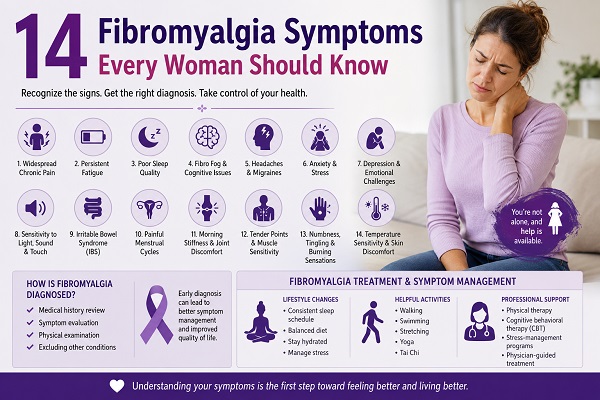
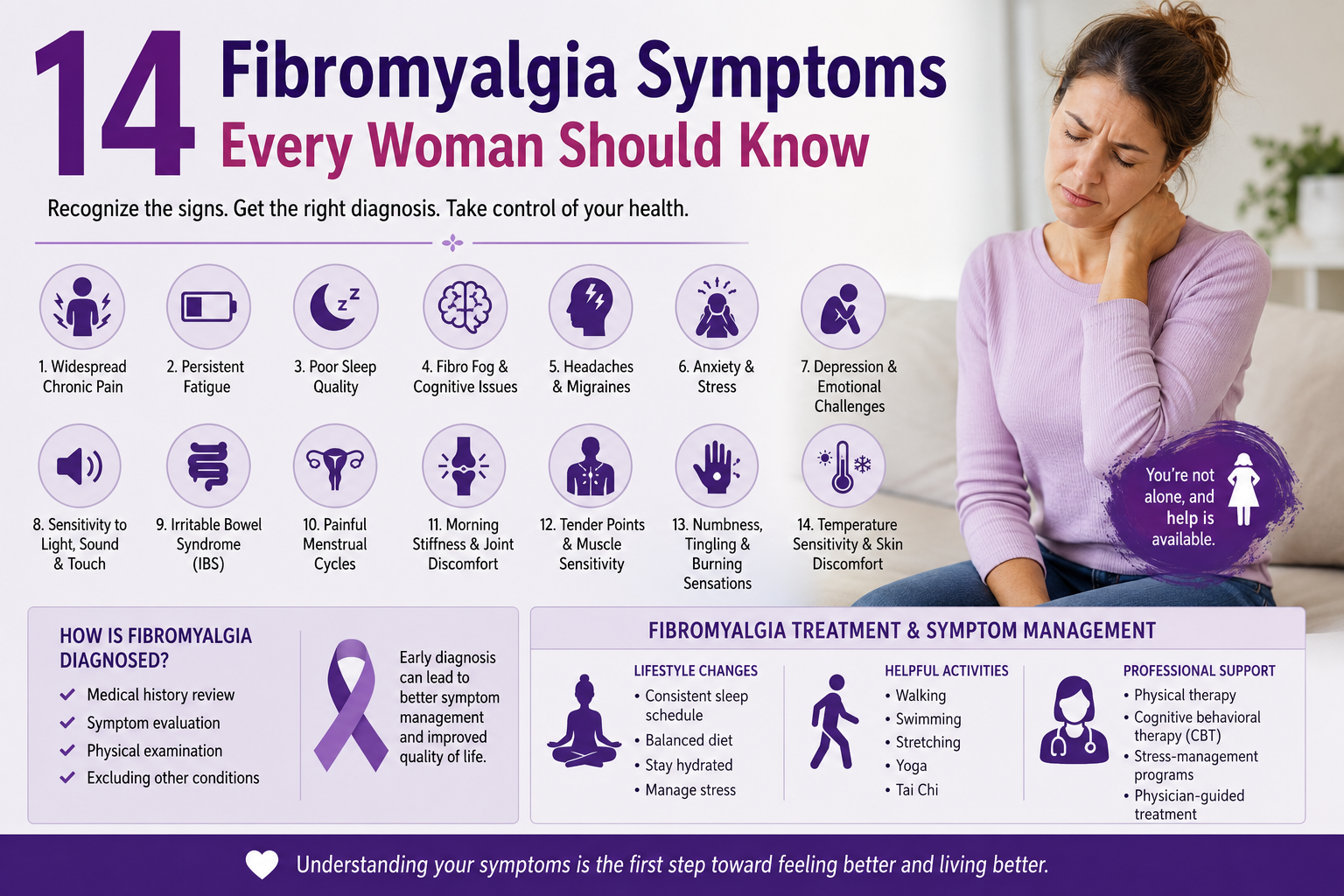
Understanding the early signs of fibromyalgia may help individuals seek medical advice sooner and develop an effective symptom-management plan. Below are 14 common fibromyalgia symptoms every woman should know.
What Is Fibromyalgia?
Fibromyalgia is a long-term condition that affects the body’s pain-processing system. Instead of pain signals being regulated normally, the nervous system amplifies them, making even minor discomfort feel more intense.
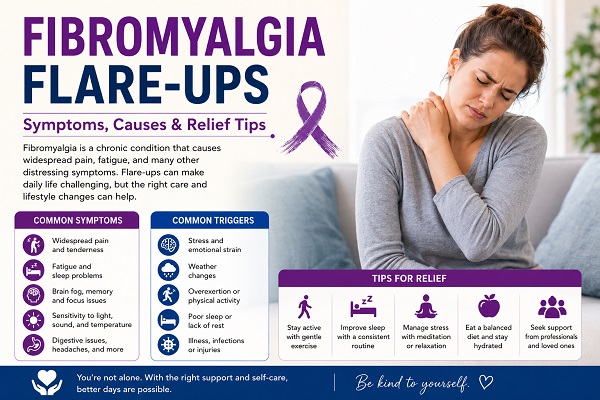
In addition to widespread pain, fibromyalgia can impact sleep quality, emotional health, digestion, memory, and overall physical functioning. Symptoms may come and go in periods known as flare-ups, which can be triggered by stress, illness, weather changes, lack of sleep, or physical exertion.
1. Chronic Widespread Pain Throughout the Body
The hallmark symptom of fibromyalgia is persistent pain that affects multiple areas of the body.
Unlike pain caused by injury, fibromyalgia pain often has no visible source. Many individuals describe it as:
- Aching pain
- Burning sensations
- Throbbing discomfort
- Stabbing pain
- Deep muscle soreness
The pain may affect the neck, shoulders, back, hips, arms, legs, and chest. Symptoms often vary in intensity from day to day.
Why It Happens
Researchers believe that changes in how the brain processes pain signals make the nervous system more sensitive, causing normal sensations to feel painful.
2. Persistent Fatigue and Extreme Tiredness
Fatigue associated with fibromyalgia is far more severe than ordinary tiredness.
Many people report feeling exhausted even after sleeping for several hours. Simple daily activities such as cooking, shopping, or working may become physically draining.
Common Signs of Fibromyalgia Fatigue
- Lack of energy throughout the day
- Feeling physically drained after minor tasks
- Difficulty staying active
- Reduced endurance
- Constant feelings of exhaustion
This fatigue can significantly impact productivity and quality of life.
3. Poor Sleep Quality and Non-Restorative Sleep
Sleep problems are among the most common fibromyalgia symptoms.
Even when individuals sleep through the night, they often wake up feeling unrefreshed. This occurs because fibromyalgia may interfere with the deeper stages of sleep that allow the body to recover.
Sleep Problems Linked to Fibromyalgia
- Difficulty falling asleep
- Frequent nighttime awakenings
- Light or interrupted sleep
- Restless leg syndrome
- Sleep apnea
Poor sleep often worsens pain, fatigue, and cognitive symptoms.
4. Fibro Fog and Cognitive Dysfunction
Many people with fibromyalgia experience mental confusion commonly referred to as “fibro fog.”
This symptom can affect memory, concentration, and mental performance.
Symptoms of Fibro Fog
- Forgetfulness
- Difficulty concentrating
- Trouble following conversations
- Reduced mental clarity
- Problems multitasking
- Slower thinking processes
For some individuals, cognitive difficulties can be just as frustrating as physical pain.
5. Frequent Headaches and Migraines
Headaches occur frequently in people with fibromyalgia.
Muscle tension in the neck and shoulders may contribute to recurring headaches and migraines.
Common Headache Symptoms
- Tension headaches
- Migraine attacks
- Pressure around the head
- Neck-related headache pain
Managing stress and improving sleep quality may help reduce headache frequency.
6. Anxiety and Heightened Stress Responses
Living with chronic pain can affect emotional well-being.
Many women with fibromyalgia experience anxiety symptoms due to ongoing discomfort, sleep deprivation, and uncertainty about symptom flare-ups.
Anxiety Symptoms May Include
- Excessive worrying
- Nervousness
- Restlessness
- Increased stress sensitivity
- Difficulty relaxing
Addressing mental health is an important part of comprehensive fibromyalgia management.
7. Depression and Emotional Health Challenges
Depression commonly occurs alongside fibromyalgia.
Persistent pain and fatigue can affect daily activities, relationships, and overall quality of life, increasing the risk of emotional distress.
Signs of Depression
- Persistent sadness
- Loss of motivation
- Feelings of hopelessness
- Reduced interest in favorite activities
- Emotional exhaustion
Professional support can help individuals manage both physical and emotional symptoms.
8. Heightened Sensitivity to Touch, Sound, and Light
Fibromyalgia often causes increased sensory sensitivity.
Many individuals become unusually sensitive to environmental stimuli that would not normally cause discomfort.
Common Sensory Triggers
- Loud sounds
- Bright lights
- Strong smells
- Tight clothing
- Physical pressure
- Temperature changes
These sensitivities may contribute to symptom flare-ups and increased discomfort.
9. Irritable Bowel Syndrome (IBS)
Digestive problems frequently occur in people with fibromyalgia.
One of the most common digestive conditions associated with fibromyalgia is irritable bowel syndrome (IBS).
IBS Symptoms
- Abdominal pain
- Bloating
- Diarrhea
- Constipation
- Stomach cramps
Researchers believe the nervous system may play a role in both fibromyalgia and IBS symptoms.
10. Painful Menstrual Cycles
Women with fibromyalgia often report more severe menstrual discomfort.
Because the nervous system becomes more sensitive to pain signals, menstrual cramps may feel stronger and last longer.
Menstrual Symptoms May Include
- Severe cramping
- Lower abdominal pain
- Increased fatigue
- Back pain during menstruation
Medical advice should be sought if menstrual pain becomes severe or interferes with daily life.
11. Morning Stiffness and Joint Discomfort
Many people with fibromyalgia wake up feeling stiff and sore.
This stiffness often affects the:
- Neck
- Shoulders
- Back
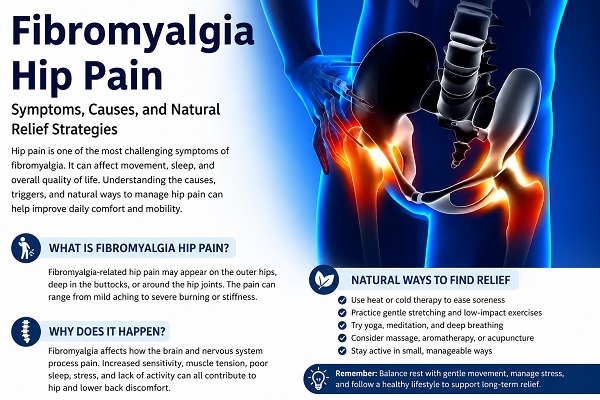
- Hips
- Knees
- Hands
Although movement may gradually improve symptoms, stiffness can persist for hours in some individuals.
12. Tender Points and Muscle Sensitivity
Fibromyalgia is associated with specific areas of increased tenderness known as tender points.
These locations may become painful even when exposed to mild pressure.
Common Tender Point Locations
- Neck
- Upper chest
- Shoulders
- Elbows
- Lower back
- Hips
- Knees
Tenderness can vary significantly between individuals.
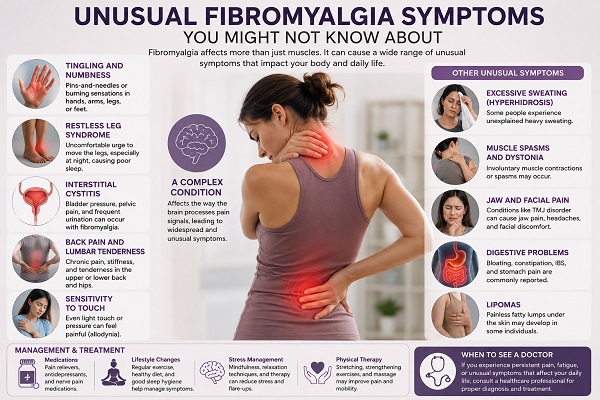
13. Numbness, Tingling, and Burning Sensations
Many patients experience unusual nerve-related sensations.
These symptoms often occur in the hands, feet, arms, or legs and may come and go throughout the day.
Common Sensations
- Pins and needles
- Mild numbness
- Burning feelings
- Tingling sensations
- Crawling sensations on the skin
These symptoms can sometimes mimic other neurological conditions.
14. Temperature Sensitivity and Skin Discomfort
Fibromyalgia can affect how the body responds to temperature.
Many individuals become highly sensitive to heat, cold, or sudden weather changes.
Additional Symptoms May Include
- Feeling unusually cold
- Excessive sensitivity to heat
- Burning skin sensations
- Unexplained itching
- Increased discomfort during weather changes
These symptoms may become more noticeable during fibromyalgia flare-ups.
How Fibromyalgia Is Diagnosed
There is currently no single laboratory test that can definitively diagnose fibromyalgia.
Healthcare professionals typically diagnose the condition by:
- Reviewing medical history
- Evaluating symptoms
- Performing physical examinations
- Excluding other conditions with similar symptoms
Early diagnosis can help individuals access appropriate treatment and symptom-management strategies.
Fibromyalgia Treatment and Symptom Management
While there is no cure for fibromyalgia, many treatment approaches can help improve quality of life.
Lifestyle Changes
- Maintain a consistent sleep schedule
- Engage in regular low-impact exercise
- Eat a balanced diet
- Stay hydrated
- Manage stress effectively
Helpful Physical Activities
- Walking
- Swimming
- Stretching
- Yoga
- Tai Chi
Professional Treatment Options
- Physical therapy
- Cognitive behavioral therapy (CBT)
- Stress-management programs
- Physician-guided treatment plans
Treatment should always be personalized based on individual symptoms and needs.
Final Thoughts
Fibromyalgia is a complex chronic condition that affects both physical and emotional health. Symptoms can range from widespread pain and fatigue to digestive issues, sleep disturbances, and cognitive difficulties. Recognizing the early warning signs may help individuals seek timely medical evaluation and develop an effective management plan.
Although living with fibromyalgia can be challenging, many people successfully manage their symptoms through medical support, healthy lifestyle habits, regular physical activity, and stress reduction techniques. Understanding the condition is an important step toward improving long-term well-being and quality of life.