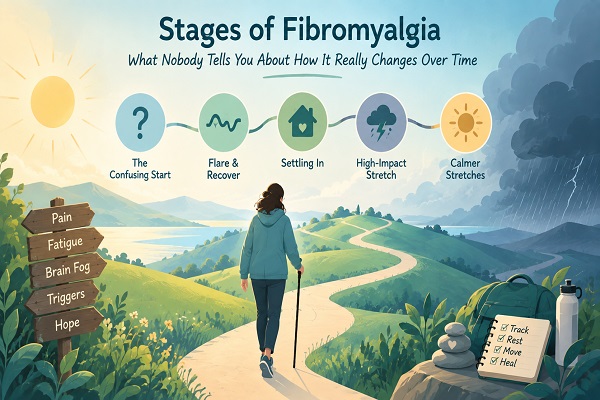
Stages of Fibromyalgia: What Nobody Tells You About How It Really Changes Over Time
The first time I typed “stages of fibromyalgia” into Google, I was hoping for a neat chart. Stage 1, stage 2, stage 3. Something I could point to and say, okay, this is where I am.
What I got was a pile of contradicting lists. One site said four stages, another said three, and a third had a scary “final stage” that made my stomach drop at 1 a.m.
Here’s what those lists usually skip. Doctors don’t use an official staging system for fibromyalgia. There’s no blood test or scan that says “you’re at stage 2.” So what are people describing? Let’s walk through it honestly.
So Why Does Every Website List Stages Anyway?
Conditions like cancer or kidney disease have real stages, because doctors can measure how far the disease has progressed. Fibromyalgia doesn’t work that way.
It’s diagnosed from your symptoms: widespread pain lasting at least three months, deep fatigue, sleep that doesn’t refresh you, and that foggy, forgetful feeling many people call “fibro fog”. Doctors also usually check that nothing else explains it.
It also doesn’t damage your joints or muscles the way arthritis can. Research that follows people over the years suggests symptoms often bounce up and down instead of steadily getting worse.
So when you see the stages of fibromyalgia lists online, they’re not medical staging. They’re patterns that patients and bloggers noticed and put into buckets. Useful as a rough map, but please don’t treat them as a diagnosis.
The Four Patterns People Usually Describe
Think of these as chapters people commonly go through, not steps everyone must climb.
1. The “Something’s Off” Phase
This is the confusing start. You’re tired in a way sleep doesn’t fix. Your neck and shoulders ache for no reason. Maybe you’re getting headaches, or your hands feel stiff in the morning. If this sounds familiar, my guide to the early symptoms of fibromyalgia covers what to watch for.
Most people I’ve talked to spent months here, sometimes years. Tests come back “normal,” and that’s the frustrating part. Many of us start doubting ourselves before anyone confirms anything.
2. The Flare-and-Recover Phase
Now a pattern shows up. You have a rough week, then a decent one. A bad night of sleep, a stressful few days, or a weather change seems to set things off. I break these down in my post on flare-up triggers.
This is when tracking starts to pay off. Once you see that three bad sleeps in a row lead to a flare, you can plan around it.
3. The Settling-In Phase
You have a diagnosis, or at least a working explanation. You know your triggers, you’ve tried a few things, and you’re building a routine. Pain and fatigue may still be there, but you’re no longer surprised by them.
For many people this is the longest phase, and honestly, it can be a stable one.
4. The High-Impact Stretch
Some people go through periods where symptoms hit hard and daily life shrinks. Work gets difficult, and even simple errands feel like a lot. Deep, aching fibromyalgia muscle pain often takes center stage here.
These stretches often follow a big stressor: an illness, surgery, an injury, or a rough life event. Importantly, they aren’t necessarily permanent. Many people come back down from them with the right support.
And there’s a fifth pattern people don’t list enough: the calmer stretch. Plenty of people find their symptoms ease with consistent sleep, gentle movement and good medical support.
Why It’s Not a Staircase
The biggest shift in how I think about this came when I dropped the staircase idea. The stages of fibromyalgia you read about make it sound like you only go up, from mild to severe.
That’s not how most people describe it. It’s closer to weather. Some seasons are stormy, some are mild, and you can move between them in either direction.
Once I saw it that way, a bad week stopped feeling like proof that I was “getting worse.” It was just a storm passing through.
How to Track Where You Are (Step by Step)
Since no doctor is going to tell you which of the stages of fibromyalgia you’re in, tracking your own patterns is the next best thing. Here’s the simple method I’d suggest.
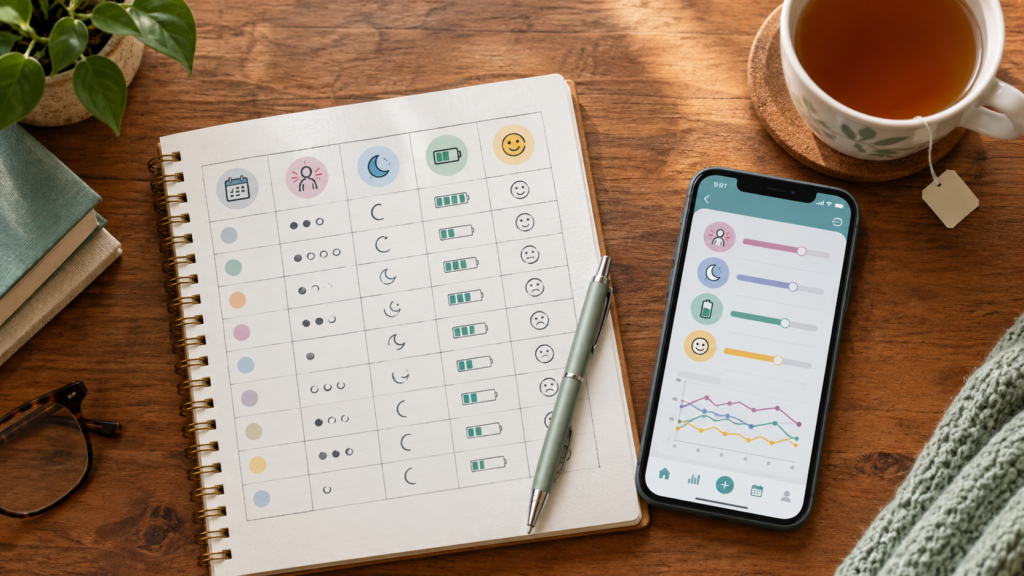
Step 1: Pick a baseline for two weeks. Every evening, jot down four things: pain (0–10), fatigue (0–10), hours slept, and how clear your head felt. That’s it. Keep it small or you’ll quit by day four.
Step 2: Use a tool you’ll actually open. A notes app works fine. If you want something more structured, apps like Bearable or Symple let you log symptoms and spot trends. A wearable like a Fitbit or Apple Watch can add sleep data, though treat those numbers as rough estimates.
Step 3: Track function, not just pain. Ask: what could I do this week that I couldn’t last month? Walk ten minutes? Cook dinner? Function tells you far more than a pain score.
Step 4: Note the possible triggers. Bad sleep, skipped meals, a stressful phone call, a big day of chores. After a few weeks, patterns show up that you’d never notice otherwise. If you’re still figuring out whether your symptoms even point to this condition, read how to tell if someone has fibromyalgia first.
Step 5: Bring a monthly summary to your doctor. A one-page snapshot beats trying to remember how the last six weeks felt. You can also ask about the Fibromyalgia Impact Questionnaire, a short form clinicians use to gauge how much symptoms affect your life.
Step 6: Change one thing at a time. If you start a new stretching routine, a supplement, and a new bedtime all in the same week, you won’t know what helped.
Mistakes I Made (and Keep Seeing)
Trying to self-stage. Spending hours trying to pin down exactly where you sit in the stages of fibromyalgia will mostly just raise your anxiety. Your symptoms and how they affect your day matter far more than a label.
Pushing hard on good days. This one’s a classic. You feel great, so you clean the whole house, do the groceries and take a long walk. Then you crash for three days. Spreading activity across the week works better than the boom-and-bust cycle.
Quitting movement completely. When everything hurts, resting seems logical. But total rest often makes stiffness and fatigue worse. Gentle options like walking, warm-water exercise or easy yoga are commonly recommended. Start small, and check with your doctor first.
Ignoring sleep. I underestimated this for a long time. Consistent bedtimes, a cool dark room, and less late-night screen time made a bigger difference than most things I bought.
Blaming everything on fibro. A new, unusual or sudden symptom deserves a proper check. Fibromyalgia can exist alongside other conditions, and assuming every ache is “just fibro” can delay real answers.
Comparing yourself to others. Someone else’s story in a support group isn’t a preview of yours. Two people with the same diagnosis can have completely different experiences.
When to Call Your Doctor
Don’t wait it out if you notice any of these:
- Unexplained weight loss, fever, or night sweats
- Swollen, red or hot joints
- New numbness, weakness or trouble walking
- Pain that suddenly changes character or becomes severe
- Low mood that stays heavy for weeks
Fibromyalgia is common enough that people forget it can travel with other conditions, so it’s always worth asking.
Where I’ve Landed
If you take one thing away about the stages of fibromyalgia, let it be this: they’re a story people tell to make sense of something confusing, not a medical countdown. Your path is your own, and it can improve as well as dip.
Track what you can, be patient with the rough weeks, and lean on a doctor who takes you seriously. That combination has helped more people than any chart ever will.
Disclaimer: This article is for general information only and isn’t medical advice. Please talk to a qualified healthcare provider about your own symptoms and treatment.