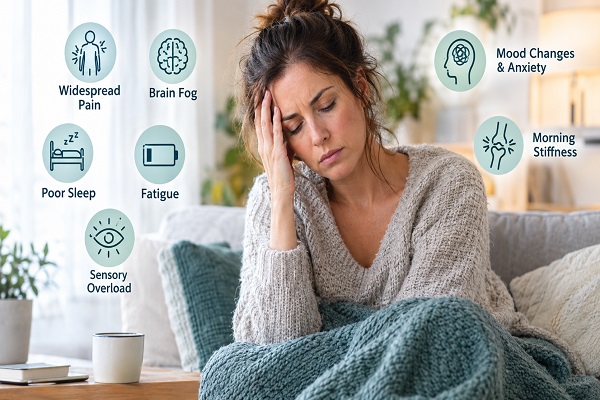
I still remember the morning I couldn’t lift my coffee mug without my wrist screaming at me. Not “sore from the gym” pain. A weird, deep, all-over ache that made me feel like I’d been hit by a truck in my sleep. That was my introduction to fibromyalgia, and it took almost two years of doctor visits, blood tests, and a lot of “it’s probably just stress” before I got an actual diagnosis. So when people ask me what the worst symptoms of fibromyalgia really are, I don’t answer with a textbook list — I answer with what actually wrecked my daily life.
If you’re here because you (or someone you love) is going through this, I want this to feel like a conversation, not a medical pamphlet. I’ll walk through the symptoms that hit hardest, share what helped me manage them, and point out the mistakes I made along the way so you don’t have to repeat them.
It’s Not Just “Being Tired”
Before we get into specifics, let’s clear something up. A lot of people hear “fibromyalgia” and think it’s just chronic tiredness or being a little achy. Honestly, that misconception is one of the hardest parts of living with it — because the worst symptoms of fibromyalgia go way beyond feeling worn out.
It’s a full-body condition that messes with your pain signals, your sleep, your brain, and even your mood, often all at once. And it’s invisible, which means people don’t always believe you’re struggling.
The Symptoms That Hit the Hardest
1. Widespread, Unpredictable Pain
This is usually the first thing people notice, and for good reason — it’s relentless. It’s not one sore spot; it’s your shoulders, hips, lower back, neck, and legs all aching at once, and the pain can move around from day to day.
Some mornings I’d wake up and my feet would feel bruised, like I’d walked on gravel barefoot all night, even though nothing happened. Other days it was my forearms. There’s no logic to it, which is honestly one of the most frustrating parts.
What helped me: A heating pad by the bed, gentle stretching before getting up (not after — before), and tracking flare patterns in a simple app called Bearable, which let me connect pain spikes to sleep, weather, and stress levels.
2. Fibro Fog (Brain Fog That Actually Scares You)
If I had to rank the worst symptoms of fibromyalgia, this one would be near the top, because it messed with my confidence more than the pain did. I’d forget words mid-sentence. I’d walk into a room and blank on why. I once put my car keys in the fridge and didn’t notice for an hour.
It’s not “being forgetful.” It’s your brain genuinely struggling to process and retrieve information, especially during flares.
Lesson learned: I stopped trying to push through important tasks on foggy days. Now I schedule anything that needs sharp focus — emails, paperwork, decisions — for my clearer mornings, and I keep a notes app open constantly so I’m not relying on memory alone.
3. Sleep That Doesn’t Actually Rest You
This one’s sneaky. You can sleep eight hours and still wake up feeling like you ran a marathon. Fibromyalgia messes with deep sleep specifically, so your body never fully recovers overnight.
For a long time I thought I just had bad sleep hygiene, so I blamed myself for years before learning this was a core part of the condition, not a personal failure.
What actually helped: A consistent wind-down routine, keeping the bedroom cooler, and — this made a bigger difference than I expected — a weighted blanket. Not a cure, but it noticeably reduced how often I woke up during the night.
4. Fatigue That Isn’t Fixed by Rest
This is different from regular tiredness. It’s a heavy, bone-deep exhaustion that doesn’t go away with a nap or a lazy Sunday. Some days, just showering felt like a workout.
I used to feel guilty canceling plans because “I just slept in,” but this kind of fatigue isn’t about laziness — it’s about your body not producing or managing energy the way it should.
Step-by-step tip that helped me: I started using the “spoon theory” method — mentally budgeting my energy like a limited resource each day — and pacing tasks instead of powering through and crashing later.
5. Sensory Overload (Light, Sound, and Touch)
Nobody warns you about this one. Bright lights, loud restaurants, even the tag on a shirt could suddenly feel unbearable. During flares, my skin felt hypersensitive, like everything was turned up too loud.
This is genuinely one of the worst symptoms of fibromyalgia because it makes normal environments — grocery stores, parties, offices — exhausting in a way people without fibromyalgia just don’t understand.
What helped: Noise-canceling earbuds (I use a basic pair, nothing fancy) and giving myself permission to leave loud environments early instead of white-knuckling through them.
6. Mood Swings and Anxiety Spikes
Living with constant, unpredictable pain takes a toll mentally — that’s just the truth. I went through stretches of feeling anxious for no clear reason, and other times just flat, low, and unmotivated.
It’s not “all in your head,” but the physical and emotional sides of fibromyalgia are deeply connected, and ignoring the mental health piece made everything else worse for me.
What made a difference: Talking to a therapist who actually understood chronic illness (not every therapist does — ask directly when booking), plus short daily walks when my body allowed it.
7. Stiffness, Especially in the Morning
Waking up feeling like your joints are rusted shut is oddly common. It’s not arthritis, but it can feel similar — tight, achy, and slow to loosen up.
Tip: A few minutes of slow stretching before even standing up made mornings noticeably less brutal for me.
Mistakes I Made Early On (So You Don’t Have To)
- Pushing through pain on “good days.” I’d overdo it, feel amazing for a few hours, then crash hard for the next three days. Pacing beats bursts of energy every time.
- Ignoring sleep quality and only counting hours. Eight bad hours isn’t the same as eight restful ones.
- Not tracking symptoms. Once I started logging flares, I noticed patterns with weather changes and stress that I’d completely missed before.
- Waiting too long to ask for help. I tried to “tough it out” for way longer than I should have before seeing a specialist who actually understood fibromyalgia.
A Few Real Examples
A friend of mine with fibromyalgia describes her worst flare days as “wearing a body that isn’t hers.” Another person I met through an online support group said sensory overload was harder for her to manage than the pain itself, because it made simple errands feel impossible.
Everyone’s experience is a little different, which is part of what makes fibromyalgia so tricky — the worst symptoms of fibromyalgia for one person might barely register for someone else.
When to Talk to a Doctor
If you’re dealing with several of these symptoms consistently — not just one bad week, but an ongoing pattern — it’s worth bringing up with a doctor, ideally a rheumatologist familiar with fibromyalgia. This article isn’t medical advice; it’s real-world experience meant to help you feel less alone and more prepared for that conversation.
Final Thoughts
Living with fibromyalgia means learning your own patterns, being patient with yourself on bad days, and figuring out which small habits actually make a difference for you. It’s not about “fixing” everything overnight — it’s about finding a rhythm that makes daily life a little more manageable.
If you’re just starting this journey, know this: the worst symptoms of fibromyalgia can feel overwhelming at first, but with the right support, tracking tools, and a little trial and error, life does get easier to navigate. You’re not imagining it, and you’re not alone in it.