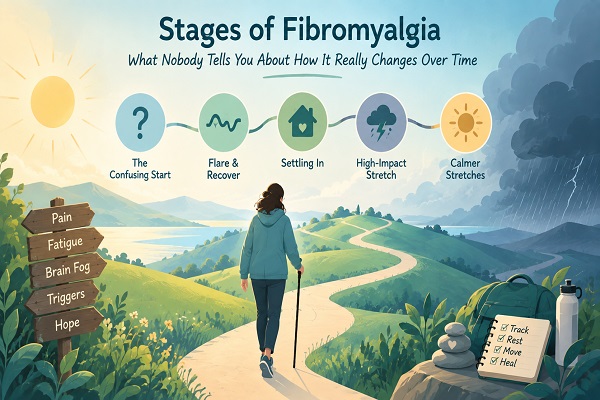
The first time I truly understood fibromyalgia pain, I was standing in a grocery store aisle holding a carton of eggs, and my hand just stopped cooperating. Nothing dramatic happened. I didn’t fall or hurt myself. My forearm felt like it had been wrapped in hot wire, my shoulders were burning, and all I could think was, “How do I get to the car without dropping everything?”
I made it. I also sat in the driver’s seat for ten minutes afterward, not sure whether I was angry, scared, or just tired. If you’ve had a day like that, you already know what I mean. If you haven’t, I hope this saves you a few of the mistakes I made along the way.
A quick note before we start: I’m sharing what I’ve noticed and what worked for me and for people I’ve talked with. I’m not a doctor, and none of this replaces medical advice. Please use it as a starting point for conversations with your own healthcare provider.
Why this pain doesn’t behave like “normal” pain
Early on, I kept looking for a reason. Did I sleep wrong? Lift something heavy? Pull a muscle? Usually there was nothing to find.
What finally clicked for me was learning that fibromyalgia isn’t really an injury problem. Many researchers believe the nervous system turns the volume up on pain signals, so ordinary sensations like a hug, a waistband, or a cold breeze can register as pain. Scientists call this central sensitization.
That explained a lot. It’s why the pain moves around, why it can feel like burning one day and deep aching the next, and why scans and blood tests so often come back “normal.” It also explained why resting on the couch for a week never fixed anything.
The mistakes I made early on
I’ll be honest here, because this is the part I wish someone had told me.
I pushed hard on good days. When I woke up feeling decent, I cleaned the whole apartment, did laundry, ran errands, and cooked dinner. Then I paid for it for the next three days. Doctors and patient groups call this the “boom and bust” cycle, and I lived in it for almost a year.
I treated sleep as optional. I stayed up late because that was the only quiet time I had. I didn’t connect it to how rough my mornings felt.
I went too hard on exercise. Someone told me movement helps, so I signed up for a class and went three times in one week. My whole body felt like it had been hit by a truck. I quit for two months and felt like a failure.
I googled symptoms at 2 a.m. Bad idea. You will always find the scariest possible explanation, and it never helps you sleep.
I hid it. I told people I was “just tired.” Being honest with even one or two close people made everything lighter.
Start a symptom log (this changed everything)
If I could give only one piece of advice, it would be this one. Track what’s happening for a few weeks before you try to fix anything.
Here’s the simple version I use:
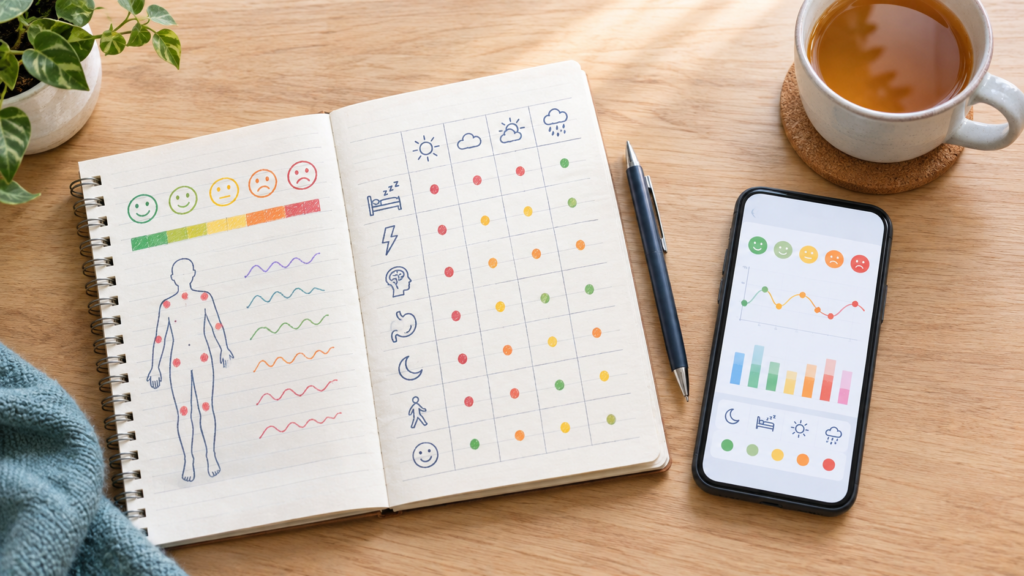
- Pick a tool you’ll actually use. I tried a few options. Bearable is a free-to-start app that lets you log symptoms, mood, sleep, and activities. A basic notes app on your phone works too. So does a cheap paper notebook by your bed.
- Rate your pain from 0 to 10 once or twice a day. Don’t overthink it.
- Write down sleep. Roughly when you fell asleep, when you woke up, and how you felt.
- Note what you did that day. Long drive? Stressful phone call? Big meal? Unusual workout?
- Look at the pattern after two or three weeks.
Once I started tracking, I could see that my worst days followed short nights and stressful afternoons far more often than they followed anything I ate. That was a surprise. I had been blaming food for months.
Your patterns will probably be different from mine, which is exactly why the log is useful. It also gives your doctor real information instead of “it hurts sometimes.”
Heat, comfort, and the small tools that help
I don’t have a miracle product. What I have is a handful of boring things that take the edge off.
- A heating pad. Mine has an auto shut-off, which matters because I fall asleep with it on my shoulders. Warmth relaxes tight muscles, and for me it’s the fastest way to calm a bad evening.
- Warm showers or baths. An Epsom salt bath feels great, though I’ll be upfront that the evidence for salts specifically is thin. The warm water is probably doing most of the work.
- A TENS unit. These small devices send mild electrical pulses through pads on your skin. Some people swear by them and others feel nothing. I found mine helps a bit with my lower back. Ask your doctor or physical therapist before you buy one.
- Soft, loose clothing. It sounds silly, but tight waistbands and scratchy seams can make a sensitive body miserable.
None of these fix the underlying problem. They make a hard day more bearable, and that counts for a lot.
Movement: start smaller than feels reasonable
The rule that finally worked for me was boring: start so small it feels silly. I began with five minutes of slow walking around my block, and on some days I only made it to the mailbox.
Most rheumatology guidance supports gentle, regular movement for fibromyalgia, and I believe it. But nobody mentions that the first couple of weeks can feel worse before they feel better. People say exercise helps fibromyalgia pain over the long run, and I think that’s true, but you have to ease into it or your body will push back hard.
Here’s the approach that worked for me:
- Pick something gentle. Walking, slow stretching, tai chi, or a warm-water class if you have access to a pool.
- Start with 5 minutes. Yes, really.
- Add a minute or two every few days, not every day.
- Stop before you feel wrecked. If you’re thinking “I could do more,” that’s the right stopping point.
- Give yourself a rest day after a harder session.
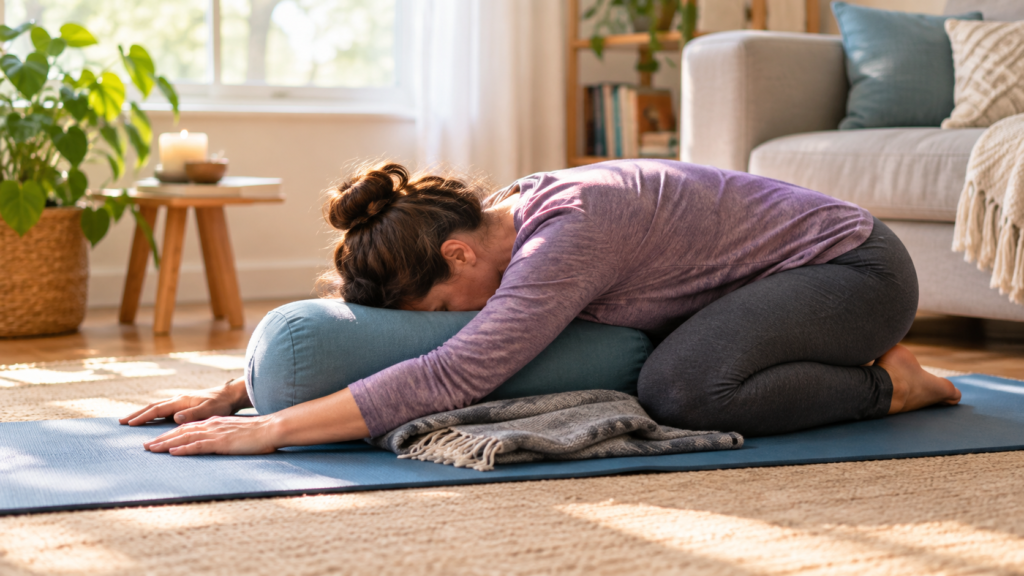
Warm water was a revelation for me. Floating takes the weight off sore joints, and the pool at my local community center became my favorite place. Yoga videos on YouTube also work if you filter for “gentle” or “chair yoga.”
Pacing: the skill nobody teaches you
Pacing means spreading your energy across the day and week instead of spending it all at once. It’s the opposite of what most of us learned about being productive.
What helped me:
- Choose three main tasks per day. Anything beyond that is a bonus.
- Use a timer. Twenty minutes of an activity, then a ten-minute break, even if I feel fine.
- Break big chores into pieces. I do laundry in three separate stages across a week.
- Plan rest before big events. If I have a family dinner, the day before and the day after stay quiet.
Some people find the “spoon theory” helpful here. It’s a popular way to describe limited daily energy, using spoons as units. I found it useful for explaining my limits to friends who didn’t understand why I canceled plans.
Sleep: the boring foundation
I used to think sleep advice was fluff. Then I fixed mine and noticed a real difference in how my body felt in the morning.
What I do now:
- Wake up at the same time every day. Even weekends. This mattered more than bedtime.
- Keep the bedroom dark and cool. A cheap sleep mask made a noticeable difference.
- Put the phone away 30 to 45 minutes before bed. I charge it across the room.
- Wind down with something quiet. A short breathing exercise from an app like Insight Timer or Calm works for me.
- Watch what I do with caffeine. No coffee after noon.
I also wear a Fitbit to bed, not because the numbers are perfect, but because seeing a pattern of restless nights helped me connect the dots with my pain logs. If you still feel unrefreshed after weeks of good habits, mention it to your doctor, since other sleep problems can overlap with fibromyalgia.
Build a flare-up plan before you need one
Having a plan matters because fibromyalgia pain has a way of showing up on the exact day you scheduled something important. When you’re in the middle of a flare, making decisions is the last thing you want to do.

I keep a small “flare box” ready:
- Heating pad and a spare cover
- A few easy freezer meals
- A short playlist or podcast list for lying down
- Loose, comfortable clothes on the top of my drawer
- A written list of things I’ve learned to do first, like water, gentle heat, and a short rest
I also gave my partner a copy of the list, so I don’t have to explain anything when I’m hurting. It sounds small, but it took away a lot of the panic.
Talking to your doctor (and what to bring)
For a long time, I walked into appointments and said something vague like, “I just hurt everywhere.” That got me nowhere.
Now I bring:
- My symptom log from the last four to six weeks
- A short list of my top three problems. Not ten. Three.
- A list of everything I take, including supplements
- Specific questions. For example, “Would physical therapy make sense for me?” or “Could a sleep evaluation help?”
Treatment usually involves a mix of approaches. Some people use prescription medications, and that’s a decision to make with your doctor, never on your own. Please don’t start, stop, or change any medication without professional guidance.
Also, know when to get help quickly. If you have new pain that feels very different from your usual, fever, sudden weakness, chest pain, or anything that scares you, don’t assume it’s “just fibro.” Get checked.
The mental side is real, and it’s not “in your head”
I used to think that admitting stress made things worse meant admitting the pain was imaginary. It isn’t. Fibromyalgia pain is real; the nervous system is just turned up too loud, and calming it down is part of the treatment.
For me, that meant a few things. I learned a simple slow-breathing routine: in for four counts, out for six, for about five minutes. I started seeing a therapist who uses cognitive behavioral therapy (CBT), which many people with chronic pain find useful for handling the stress and worry that come with it. And I stopped apologizing for needing rest.
Support groups helped too, whether local or online. Hearing “me too” from someone who genuinely gets it is worth more than any product I’ve bought.
Things I’d skip
- Miracle cure promises. If a website says it can cure your condition in 30 days, close the tab.
- Stacking supplements. I once took five at the same time and couldn’t tell what was doing what. Talk to your doctor or pharmacist first, since some interact with medications.
- Comparing yourself to other people. Someone’s “great routine” may not fit your body at all.
- Waiting until you feel perfect to start. You probably won’t. Start small anyway.
Final thoughts
If you’re reading this in the middle of a bad day, I’m sorry. I know how heavy it feels. I can’t promise the pain goes away, because for a lot of us it doesn’t. But I can say that mine changed shape once I started paying attention, pacing myself, and asking for help.
Pick one thing from this list, just one, and try it this week. Maybe it’s the symptom log, or five minutes of walking, or a fixed wake-up time. Small steps add up more than you’d think, even when progress feels slow.
Be gentle with yourself. You’re doing more than most people can see.